Case Study: How a Global Logistics Firm Achieved 34% Cost Reduction Through AI in Information Technology
When TransGlobal Logistics, a Fortune 500 third-party logistics provider managing operations across 47 countries, embarked on its artificial intelligence transformation journey in early 2024, the company faced mounting pressure from nimbler competitors and eroding profit margins in an increasingly commoditized industry. With annual revenues of $8.2 billion but operating margins that had declined from 12% to just 7% over the preceding three years, the leadership team recognized that incremental improvements to existing processes would prove insufficient. The decision to pursue comprehensive AI integration across core information technology systems represented a calculated bet that intelligent automation could fundamentally reshape operational economics while improving service quality in ways that would differentiate the company in crowded markets.
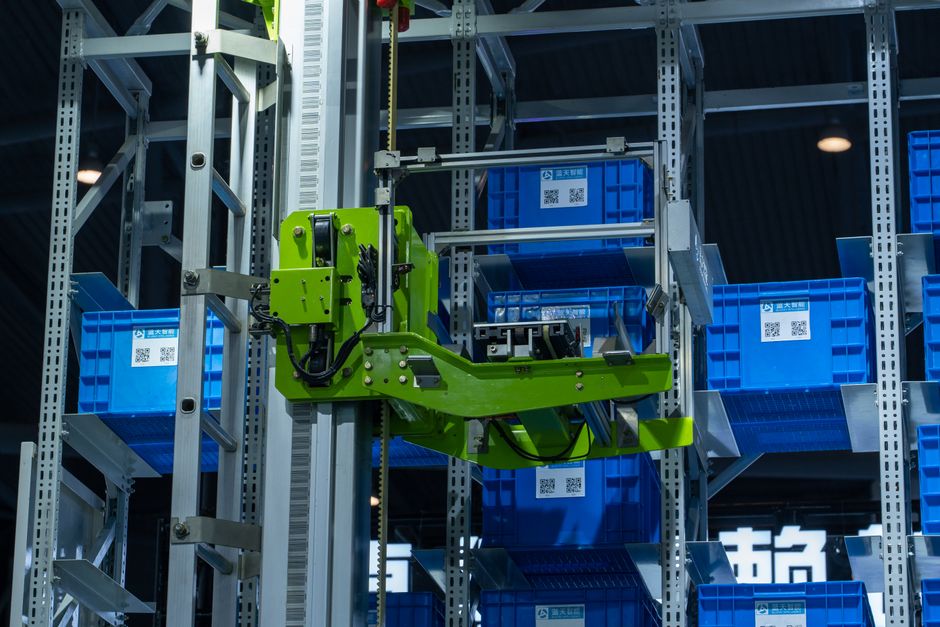
The TransGlobal case offers valuable insights into both the challenges and opportunities organizations encounter when implementing AI in Information Technology at enterprise scale. Over an 18-month implementation period, the company deployed AI capabilities across route optimization, demand forecasting, warehouse automation, customer service, and predictive maintenance, achieving measurable results that exceeded initial projections while also confronting unanticipated obstacles that required significant mid-course adjustments. The specifics of this transformation, including concrete metrics, technical decisions, organizational changes, and lessons learned, provide a detailed roadmap for other enterprises contemplating similar initiatives.
Company Background and Initial Challenges
TransGlobal Logistics operated a complex global network encompassing 287 warehouse facilities, a managed fleet of 12,000 trucks, coordination of ocean and air freight across multiple carriers, and technology systems supporting approximately 3,400 enterprise clients. The company's IT landscape reflected decades of growth through acquisition, resulting in a fragmented architecture with 14 different warehouse management systems, seven transportation management platforms, and customer data scattered across incompatible CRM instances. This technical debt created operational inefficiencies, limited visibility across the network, and made it nearly impossible to leverage data for strategic decision-making.
Specific pain points had become acute by 2024. Route planning relied heavily on manual processes and driver experience, resulting in suboptimal fuel efficiency and inconsistent delivery performance. Demand forecasting used simple historical averages that failed to account for seasonal patterns, promotional activities, or external factors, leading to chronic understaffing during peak periods and excess capacity during slower times. Warehouse operations depended on paper-based picking processes in many facilities, with error rates averaging 2.3% and productivity varying dramatically across locations. Customer service required an average of 4.2 minutes to locate shipment information across disparate systems, while routine inquiries consumed expensive human resources that could have been deployed on complex problem-solving.
The executive team, led by Chief Information Officer Patricia Chen and Chief Operating Officer James Morrison, commissioned an extensive assessment of AI opportunities in partnership with a specialized consulting firm. This three-month diagnostic phase analyzed operational data, interviewed stakeholders across business functions and geographies, and evaluated the technical feasibility of various AI applications given current infrastructure constraints. The assessment identified five high-priority use cases with combined potential to reduce operating costs by $240-310 million annually while improving service metrics that drove customer retention and pricing power.
The AI Implementation Strategy and Governance Framework
Rather than pursuing all opportunities simultaneously, TransGlobal adopted a phased approach that balanced quick wins to build organizational momentum with foundational investments required for long-term success. The implementation roadmap structured work across three waves, each lasting six months, with explicit gates requiring demonstrated value and organizational readiness before advancing to subsequent phases.
Wave One focused on use cases offering rapid return on investment with minimal dependency on infrastructure modernization. This included AI-powered route optimization leveraging existing GPS and traffic data, machine learning models for demand forecasting trained on historical transaction records, and an intelligent customer service chatbot handling routine tracking inquiries. These initiatives were designed to deliver measurable results within 90-120 days, building credibility for AI in Information Technology while generating cash flow to fund subsequent investments.
Wave Two addressed more complex opportunities requiring integration across multiple systems and significant data infrastructure upgrades. This phase implemented computer vision systems for automated warehouse quality control, predictive maintenance algorithms analyzing sensor data from fleet vehicles and material handling equipment, and dynamic pricing optimization that adjusted quotes based on capacity availability and demand patterns. Success in this wave required completion of a new cloud-based data platform that consolidated information from legacy systems into a unified analytics environment, representing a $47 million infrastructure investment justified by its enabling function for multiple AI use cases.
Wave Three targeted transformational capabilities that would fundamentally reshape TransGlobal's business model, including autonomous warehouse robots coordinated by AI orchestration systems, blockchain-enabled supply chain visibility integrated with AI-powered exception management, and prescriptive analytics that proactively recommended operational adjustments to clients. This phase depended on organizational capabilities, technical infrastructure, and market readiness developed during the preceding waves.
Governance structures ensured alignment between AI initiatives and business strategy while managing risk. A steering committee comprising the CEO, CFO, CIO, COO, and Chief Legal Officer met monthly to review progress, resolve resource conflicts, and make go/no-go decisions at phase gates. Cross-functional delivery teams combined data scientists, IT engineers, operations managers, and change management specialists, with clear accountability for both technical delivery and business value realization. An AI ethics board established guidelines for algorithmic fairness, data privacy, and appropriate human oversight of automated decisions, particularly for applications affecting employment or customer pricing.
Technology Stack and Architecture Decisions
TransGlobal's technology strategy balanced build versus buy decisions based on strategic differentiation potential and internal capability. For AI applications directly tied to competitive advantage, such as route optimization algorithms incorporating proprietary operational knowledge, the company developed custom models using open-source frameworks including TensorFlow and PyTorch. This approach retained intellectual property while allowing flexibility to incorporate domain-specific features that generic solutions could not address.
Conversely, the company purchased commercial platforms for capabilities where differentiation came from application rather than underlying technology. The customer service chatbot leveraged a leading conversational AI platform with pre-trained natural language understanding, which TransGlobal customized with logistics-specific terminology and integrated with its systems. Computer vision models for warehouse quality control began with pre-trained image recognition models that were fine-tuned on TransGlobal's specific packaging types and damage patterns, dramatically accelerating development versus training from scratch.
The cloud-based data platform, built on Microsoft Azure, implemented a modern data lakehouse architecture that combined the flexibility of data lakes with the performance and governance of data warehouses. Raw data from operational systems flowed into Azure Data Lake Storage, underwent transformation through Azure Databricks, and was served to AI models and business intelligence tools through optimized data structures. This architecture supported both batch processing for applications like demand forecasting and real-time streaming for use cases like route optimization that required immediate response to changing conditions.
MLOps practices ensured AI models could be reliably deployed, monitored, and maintained in production environments. The platform included automated model training pipelines that retrained algorithms as new data became available, continuous monitoring to detect model drift when prediction accuracy degraded, A/B testing frameworks that validated new model versions before full deployment, and comprehensive versioning that maintained audit trails of all model iterations. These capabilities transformed AI from fragile prototypes into robust production systems that operations teams could depend on 24/7.
Deployment Timeline and Key Milestones
The route optimization initiative launched in April 2024 with a pilot covering 200 trucks in the Midwest region. Initial results were promising, with average route miles decreasing by 11% and on-time delivery improving from 87% to 93%. However, deployment exposed unexpected challenges around driver acceptance, as many experienced drivers resisted AI-recommended routes that contradicted their intuition. This required additional change management, including revised incentive structures that rewarded outcomes rather than adherence to traditional practices and enhanced transparency showing drivers the logic behind route recommendations. By July 2024, the system had expanded to 4,500 trucks nationwide, with average fuel cost reductions of 9.2% and measurable improvements in delivery predictability.
Demand forecasting models entered production in June 2024, initially running in parallel with existing processes to build confidence before fully replacing legacy approaches. The AI system demonstrated 23% greater accuracy in predicting labor requirements compared to traditional methods, translating to better matching of staffing levels with actual demand. This prevented both the overtime costs associated with understaffing and the idle labor costs from overstaffing. Full deployment across all facilities was completed by September 2024, with documented annual savings of $31 million in labor optimization.
The customer service chatbot launched publicly in August 2024 after three months of development and internal testing. The bot successfully resolved 68% of tracking inquiries without human intervention, reducing average handle time from 4.2 minutes to 1.3 minutes for routine questions while allowing human agents to focus on complex issues requiring judgment and relationship management. Customer satisfaction scores for chatbot interactions initially lagged human agents (7.8 versus 8.4 on a 10-point scale) but improved to 8.1 by December 2024 as natural language capabilities were refined based on actual conversation data. The system handled 2.1 million interactions in its first six months, with estimated cost avoidance of $8.7 million.
Wave Two initiatives commenced in October 2024 following completion of the cloud data platform. Computer vision quality control systems deployed to 12 pilot warehouses in November, automatically inspecting packages for damage, verifying label accuracy, and flagging potential issues before shipment. The system processed images at a rate of 1,200 packages per hour per camera, achieving 96% accuracy compared to 91% for manual inspection while dramatically increasing inspection coverage from the 15% of packages previously checked to 100%. Error detection and prevention delivered estimated savings of $3.2 million annually per facility through reduced claims, returns, and customer service interventions. Predictive maintenance models analyzing vehicle sensor data entered production in January 2025, forecasting component failures an average of 11 days before occurrence with 84% accuracy, enabling planned maintenance that prevented costly roadside breakdowns and improved fleet availability.
Measurable Results and Business Impact
By June 2025, at the conclusion of Wave Two implementation, TransGlobal had documented substantial returns from its AI in Information Technology investments. Total operating cost reductions reached $287 million annually, exceeding the midpoint of initial projections and representing a 34% decrease in costs for functions touched by AI initiatives. Fuel and fleet efficiency improvements contributed $98 million of this total, labor optimization delivered $84 million, error reduction and quality improvements added $51 million, and customer service automation and improved retention drove the remaining $54 million.
Beyond cost reduction, AI capabilities enabled revenue growth through improved service quality and new offerings. On-time delivery performance improved from 87% to 96% across the network, while shipment tracking accuracy reached 99.4% compared to 94% previously. These service improvements supported a 2.8 percentage point increase in customer retention rates and enabled premium pricing for AI-enhanced service tiers, contributing an estimated $67 million in incremental annual revenue. Product Development Automation initiatives allowed TransGlobal to launch new service offerings 40% faster than historical timelines, accelerating the introduction of same-day delivery options and specialized handling capabilities that captured new market segments.
The financial returns translated to measurable shareholder value, with operating margins recovering from 7% to 11.3% by Q2 2025, approaching the company's historical performance before competitive pressures intensified. Stock price appreciation of 41% during the implementation period outpaced both broader market indices and logistics industry peers, reflecting investor confidence in the transformation's sustainability. Perhaps most significantly, employee engagement scores improved by 12 percentage points as staff transitioned from repetitive manual tasks to higher-value work enabled by AI augmentation, while voluntary turnover in operations roles decreased from 31% to 23% annually.
Key Lessons and Best Practices
TransGlobal's experience yielded several critical insights applicable to other organizations pursuing AI in Information Technology transformation. First, the phased approach with explicit value gates proved essential for maintaining organizational commitment and managing risk. Early wins in Wave One generated both financial returns and stakeholder confidence that sustained investment through the more challenging Wave Two initiatives requiring infrastructure modernization. The discipline to fully validate results and organizational readiness before advancing phases prevented the common pitfall of overextending across too many simultaneous initiatives.
Second, the integration of business domain expertise with data science capabilities emerged as perhaps the single most important success factor. Initial route optimization models developed by data scientists unfamiliar with logistics operations produced theoretically optimal routes that proved impractical given real-world constraints like customer delivery time preferences, vehicle capacity limitations, and driver hour regulations. The breakthrough came when operations managers with decades of industry experience joined development teams, contributing domain knowledge that dramatically improved model relevance. This lesson was applied consistently across subsequent initiatives, with cross-functional teams becoming the standard rather than data scientists working in isolation.
Third, change management required far greater investment than initially anticipated, ultimately consuming approximately 20% of total program resources. Technical capability meant nothing if employees resisted using new systems or if customers were unprepared for AI-augmented interactions. The most effective change interventions involved frontline employees in design processes, ensuring AI tools addressed real pain points rather than solving problems that existed only in executive imagination. Transparent communication about AI's role in augmenting rather than replacing human judgment helped reduce resistance, while celebrating early adopters created peer pressure for broader acceptance.
Fourth, data infrastructure investments, while expensive and invisible to end users, proved absolutely foundational for AI success. The $47 million cloud data platform initially seemed difficult to justify but ultimately enabled virtually all Wave Two and Wave Three initiatives by providing the integrated, high-quality data that sophisticated AI applications required. Organizations that attempt to build AI on inadequate data foundations inevitably encounter insurmountable obstacles during production deployment. TransGlobal's willingness to make this investment before pursuing more complex AI use cases distinguished their approach from competitors whose initiatives stalled when data limitations became apparent.
Finally, the governance framework balancing innovation with risk management proved critical for navigating ethical and regulatory considerations. The AI ethics board identified potential fairness issues in dynamic pricing algorithms that could have disadvantaged small customers, prompting design changes before public deployment. Similarly, proactive engagement with labor unions regarding warehouse automation prevented conflicts that derailed AI initiatives at peer companies. Building trust through transparency and inclusive decision-making enabled TransGlobal to move faster overall than organizations that pursued AI unilaterally and later faced stakeholder resistance.
Conclusion: A Roadmap for AI-Driven Transformation
TransGlobal Logistics' journey from embattled incumbent to AI-powered industry leader demonstrates that comprehensive AI in Information Technology transformation, while challenging, can deliver extraordinary value when approached with strategic clarity, operational rigor, and genuine organizational commitment. The company's success stemmed not from technological sophistication alone but from the disciplined integration of AI capabilities with business strategy, operational excellence, and change management. The measurable results—34% cost reduction, 41% stock price appreciation, and dramatic service quality improvements—validated the substantial investments and organizational disruption required.
For enterprises contemplating similar initiatives, the TransGlobal case offers both inspiration and practical guidance. The phased roadmap balancing quick wins with foundational investments provides a template for managing stakeholder expectations and financial risk. The technology architecture decisions, governance structures, and cross-functional team models offer proven patterns that other organizations can adapt to their contexts. Perhaps most importantly, the lessons around change management, data infrastructure investment, and domain expertise integration highlight critical success factors that transcend any specific industry or use case.
As AI capabilities continue advancing and competitive pressures intensify across industries, the strategic question is no longer whether to pursue AI transformation but how to do so effectively. Organizations that approach this challenge with the thoroughness evident in TransGlobal's initiative, learning from both their successes and mid-course corrections, position themselves to capture the full potential of Intelligent Automation Solutions while avoiding the pitfalls that derail less disciplined efforts.


Comments
Post a Comment