Future of AI Supply Chain Management: 2026-2031 Trends and Predictions
The landscape of global commerce is undergoing a seismic shift as artificial intelligence reshapes how organizations orchestrate the movement of goods, manage inventory, and respond to market dynamics. As we stand at the threshold of unprecedented technological advancement, supply chain leaders face a critical juncture: adapt to the AI revolution or risk obsolescence in an increasingly competitive marketplace. The next five years promise transformative changes that will redefine operational excellence, customer satisfaction, and competitive advantage across every industry sector.
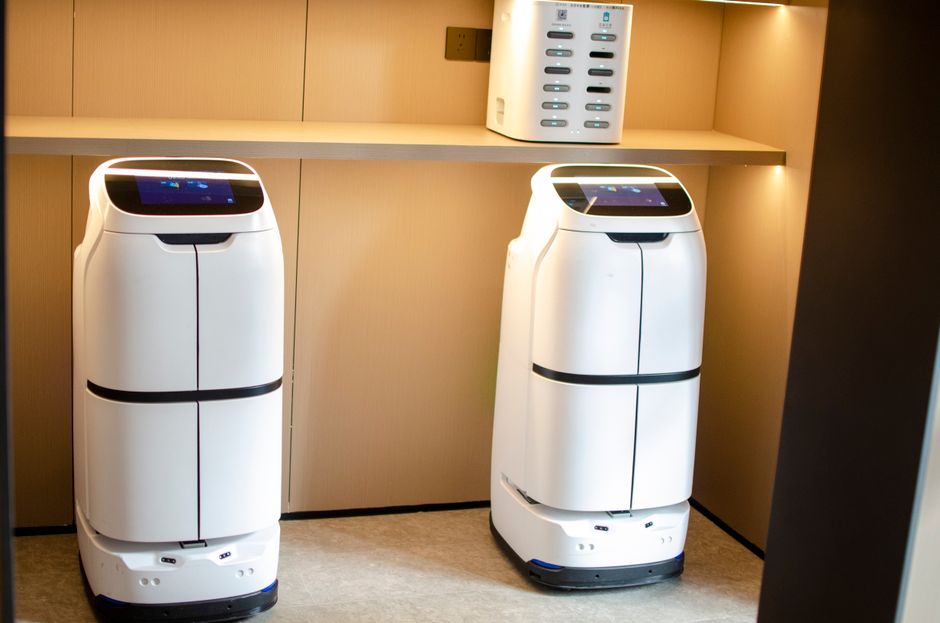
Forward-thinking organizations are already witnessing the profound impact of AI Supply Chain Management on their bottom lines and operational capabilities. This comprehensive exploration examines the emerging trends that will shape supply chain operations through 2031, offering strategic insights for executives preparing to navigate this transformative period. From autonomous decision-making systems to quantum-powered optimization, the innovations on the horizon represent not incremental improvements but fundamental paradigm shifts in how supply chains function.
Predictive Intelligence and Advanced Forecasting
By 2028, AI Supply Chain Management systems will evolve beyond reactive analytics to genuine predictive intelligence that anticipates disruptions before they materialize. Machine learning algorithms will synthesize data from thousands of disparate sources—weather patterns, geopolitical developments, social media sentiment, satellite imagery, and IoT sensors—to forecast demand fluctuations and supply interruptions with unprecedented accuracy. Organizations implementing these advanced systems will achieve forecast accuracy rates exceeding 95%, dramatically reducing the costly bullwhip effect that has plagued supply chains for decades.
The integration of natural language processing will enable systems to analyze unstructured data sources, including news articles, regulatory filings, and industry reports, to identify emerging risks and opportunities. Supply chain managers will receive contextualized alerts about potential disruptions weeks or months in advance, complete with recommended mitigation strategies and alternative sourcing options. This proactive approach to Supply Chain Optimization will transform risk management from a defensive posture to a strategic capability that creates competitive advantage.
Furthermore, these predictive systems will continuously learn from their own predictions, refining their models based on actual outcomes and improving accuracy over time. The shift from historical trend analysis to forward-looking intelligence will enable organizations to position inventory strategically, negotiate more favorable contracts with suppliers, and capture market opportunities that competitors miss. Companies that master this predictive capability will operate with significantly lower working capital requirements while simultaneously improving service levels.
Autonomous Systems and Self-Healing Supply Chains
The concept of autonomous supply chains will transition from theoretical possibility to operational reality between 2027 and 2030. AI Supply Chain Management platforms will gain the capability to make and execute decisions without human intervention for routine operational matters, reserving human judgment for strategic questions and exceptional circumstances. These systems will automatically reroute shipments around port congestion, switch suppliers when quality issues emerge, adjust production schedules in response to demand signals, and rebalance inventory across distribution networks.
Self-healing capabilities will represent a quantum leap in supply chain resilience. When disruptions occur—whether from natural disasters, labor strikes, supplier bankruptcies, or transportation failures—AI systems will immediately activate contingency protocols, engaging backup suppliers, reallocating inventory, and adjusting customer communications without waiting for human diagnosis and response. This capability will reduce the average time to recover from disruptions by 80% or more, minimizing revenue loss and customer dissatisfaction.
Collaborative Autonomy Across Networks
Perhaps most significantly, autonomous systems from different organizations will begin to communicate and collaborate directly with one another. A manufacturer's AI Supply Chain Management system will negotiate directly with a logistics provider's AI platform to secure optimal shipping rates and delivery windows, while simultaneously coordinating with the customer's system to ensure delivery aligns with warehouse receiving capacity. This machine-to-machine collaboration will eliminate communication delays, reduce errors from manual data entry, and unlock efficiency gains impossible in human-mediated processes.
The implications extend beyond operational efficiency to strategic agility. Organizations with autonomous supply chains will respond to market shifts in hours rather than weeks, capturing fleeting opportunities and defending against emerging competitive threats with unprecedented speed. This Logistics Transformation will fundamentally alter competitive dynamics, creating a clear divide between organizations that embrace autonomy and those that cling to traditional manual processes.
Sustainability and Circular Economy Integration
Environmental considerations will become central to AI Supply Chain Management by 2029, driven by regulatory requirements, consumer preferences, and genuine business value. Advanced AI systems will optimize not just for cost and speed but for carbon footprint, water consumption, waste generation, and other sustainability metrics. Organizations will track the environmental impact of every product from raw material extraction through manufacturing, distribution, consumption, and end-of-life disposal, using this data to make informed trade-offs between competing objectives.
Circular economy principles will be embedded directly into supply chain decision-making algorithms. AI systems will identify opportunities to reuse materials, refurbish products, and recapture value from items previously considered waste. Reverse logistics will transform from a cost center to a strategic capability, with AI-Driven Logistics optimizing the collection, sorting, and processing of returned goods and materials. Companies will discover that sustainable practices, when properly optimized through AI, often deliver superior financial performance compared to traditional linear models.
The integration of blockchain technology with AI Supply Chain Management will enable unprecedented transparency into product provenance and environmental credentials. Consumers will access verified information about a product's carbon footprint, labor conditions in its production, and recyclability, while regulators will have tools to enforce environmental standards across complex global supply chains. This transparency will reward responsible companies with enhanced brand value while exposing those engaged in greenwashing or unethical practices.
Hyper-Personalization at Scale
The convergence of AI capabilities with advanced manufacturing technologies will enable mass customization at scale by 2030. AI Supply Chain Management systems will orchestrate the production and delivery of highly personalized products with the efficiency previously possible only for standardized goods. Customers will specify precise product configurations, and AI will optimize the entire value chain—from component sourcing through manufacturing sequencing to last-mile delivery—to fulfill these unique requirements profitably.
This capability will fundamentally alter customer expectations and competitive dynamics across numerous industries. In fashion, customers will order garments tailored to their exact measurements and style preferences, manufactured on-demand and delivered within days. In automotive, buyers will configure vehicles with unprecedented granularity, and AI systems will orchestrate the complex network of suppliers needed to produce each unique configuration efficiently. In consumer packaged goods, products will be customized to individual preferences regarding ingredients, packaging, and delivery frequency.
The supply chain implications are profound. Organizations will shift from forecast-driven to demand-driven operations, producing goods only after orders are received rather than building inventory based on predictions. This transformation will dramatically reduce inventory carrying costs, markdown losses, and waste while simultaneously improving customer satisfaction through precisely tailored offerings. The winners in this environment will be those organizations that master the complex orchestration challenge of delivering personalization efficiently.
Quantum Computing and Next-Generation Analytics
The emergence of practical quantum computing applications between 2029 and 2031 will unlock optimization capabilities that classical computers cannot achieve. AI Supply Chain Management systems enhanced with quantum algorithms will solve complex multi-variable optimization problems—such as global network design, production scheduling across hundreds of facilities, or dynamic pricing across millions of SKUs—that currently require significant simplification or approximation. These quantum-enhanced systems will identify optimal solutions that improve performance by 10-30% compared to the best classical approaches.
Real-time scenario modeling will become exponentially more powerful. Supply chain leaders will explore thousands of what-if scenarios simultaneously, understanding the complex interdependencies and trade-offs inherent in global networks. Questions that previously required days of analysis by teams of specialists will be answered in seconds, enabling rapid strategy formulation and confident decision-making in uncertain environments.
The combination of quantum computing with AI will also enable breakthrough advances in molecular-level supply chain visibility. In industries such as pharmaceuticals and chemicals, organizations will track products not just at the package or pallet level but at the molecular level, detecting counterfeits, ensuring proper handling, and verifying quality with absolute certainty. This capability will eliminate entire categories of risk while enabling new business models based on guaranteed authenticity and provenance.
Conclusion
The next five years will witness the maturation of AI Supply Chain Management from an emerging capability to a fundamental requirement for competitive viability. Organizations that embrace these trends—predictive intelligence, autonomous operations, sustainability integration, hyper-personalization, and quantum-enhanced optimization—will create substantial and defensible competitive advantages. Those that delay will find themselves at an insurmountable disadvantage, unable to match the service levels, cost structures, and agility of AI-enabled competitors. The strategic imperative is clear: invest now in building the capabilities, talent, and partnerships necessary to thrive in this transformed landscape. As these technologies converge with broader digital transformation initiatives, the principles of Intelligent Automation will become the foundation for resilient, sustainable, and customer-centric supply chain operations that drive enterprise success in an increasingly complex global marketplace.


Comments
Post a Comment