Future of Intelligent Automation: Predictions and Trends 2026-2031
The trajectory of technological transformation over the next five years promises to reshape how organizations operate, compete, and deliver value. As we stand at the threshold of 2026, the convergence of artificial intelligence, machine learning, and process optimization is creating unprecedented opportunities for enterprises to reimagine their operational models. The evolution from simple task automation to cognitive systems capable of learning, adapting, and making complex decisions represents a fundamental shift in how work gets accomplished across industries.
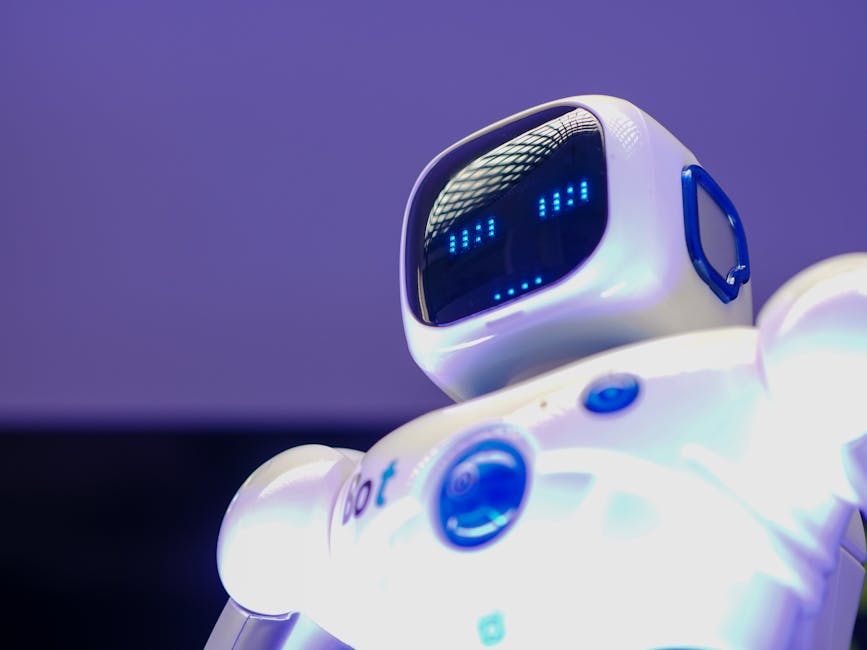
This transformation is being driven by Intelligent Automation, which combines robotic process automation with advanced cognitive capabilities to create systems that don't just follow rules but understand context, learn from patterns, and improve over time. As we look toward 2031, several key trends are emerging that will define how this technology evolves and impacts business operations, workforce dynamics, and competitive landscapes.
The Evolution of Intelligent Automation Through 2031
The next five years will witness Intelligent Automation moving beyond its current applications in back-office operations and customer service into strategic decision-making domains. By 2028, we can expect to see autonomous systems managing supply chain optimization in real-time, adjusting procurement strategies based on global economic indicators, weather patterns, and consumer sentiment analysis. These systems will process millions of data points simultaneously, identifying opportunities and risks that would be impossible for human analysts to detect within actionable timeframes.
Healthcare organizations will deploy Intelligent Automation platforms that integrate diagnostic imaging analysis with patient history, genetic markers, and treatment outcome databases to recommend personalized care pathways. Financial services firms will leverage these technologies to create dynamic risk models that adapt to market conditions in milliseconds, fundamentally transforming trading strategies and portfolio management approaches. Manufacturing environments will see the emergence of self-optimizing production systems that continuously refine processes based on quality metrics, equipment performance data, and demand forecasts.
The integration of natural language processing capabilities will enable Intelligent Automation systems to understand and respond to unstructured communications with near-human comprehension. By 2030, these platforms will participate in contract negotiations, draft complex legal documents, and conduct preliminary due diligence for mergers and acquisitions. The boundary between human and machine contribution in knowledge work will become increasingly fluid, with collaboration models replacing simple task delegation.
Emerging Technologies Shaping the Next Generation
Quantum computing integration represents one of the most significant developments on the horizon for Customer Service Automation and broader automation initiatives. While still in early commercial stages, quantum processors will enable optimization problems of unprecedented complexity to be solved within practical timeframes. This capability will revolutionize logistics planning, financial modeling, and pharmaceutical research, allowing Intelligent Automation systems to explore solution spaces that are currently computationally infeasible.
Edge computing architectures will bring cognitive processing capabilities closer to data sources, enabling real-time decision-making in environments where latency is critical. Autonomous vehicles, smart manufacturing equipment, and IoT sensor networks will embed sophisticated automation capabilities that operate independently while coordinating with centralized intelligence platforms. This distributed approach will create resilient systems that continue functioning even when network connectivity is compromised.
Neuromorphic Computing and Biomimetic Systems
The development of neuromorphic chips that mimic biological neural networks will dramatically reduce the energy consumption of AI Integration Strategies while improving pattern recognition capabilities. These processors will enable Intelligent Automation systems to be deployed in resource-constrained environments, from remote infrastructure monitoring stations to portable medical diagnostic devices. The ability to run sophisticated cognitive models on battery-powered devices will expand automation applications into domains previously considered impractical.
Biomimetic algorithms inspired by natural systems will enhance how automation platforms learn and adapt. Swarm intelligence approaches modeled on insect colonies will optimize logistics networks, while evolutionary algorithms will continuously refine process designs. These nature-inspired methods will create automation systems that exhibit emergent behaviors and self-organization capabilities beyond what explicit programming can achieve.
Industry-Specific Predictions and Transformations
The retail sector will experience a fundamental reimagining of the customer experience through hyper-personalization powered by Intelligent Automation. By 2029, virtual shopping assistants will understand individual preferences with such precision that they anticipate needs before customers articulate them. These systems will integrate purchase history, browsing behavior, social media activity, and lifestyle data to create dynamic product recommendations that evolve in real-time based on context and circumstances.
Energy companies will deploy autonomous grid management systems that balance supply and demand across distributed generation sources, storage systems, and consumption patterns. These platforms will optimize for cost efficiency, carbon reduction targets, and grid stability simultaneously, making split-second decisions about power routing and resource allocation. The integration of weather prediction models, consumption forecasting, and market pricing algorithms will create energy networks that operate with unprecedented efficiency.
Healthcare Transformation and Preventive Medicine
The healthcare industry will shift from reactive treatment models to predictive prevention strategies enabled by continuous health monitoring and intelligent analysis. Wearable devices will feed real-time biometric data into automation platforms that identify early warning signs of conditions like cardiac events, metabolic disorders, and neurological changes. These systems will alert healthcare providers and recommend interventions before symptoms become acute, fundamentally altering how medicine is practiced.
Pharmaceutical development will accelerate dramatically as Intelligent Automation platforms screen millions of molecular compounds, predict interactions, and design clinical trial protocols. The time from drug discovery to market approval could shrink from over a decade to under five years for certain therapeutic categories. Personalized medicine will become standard practice as automation systems analyze individual genetic profiles to determine optimal treatment regimens and dosing strategies.
Workforce and Organizational Changes Ahead
The relationship between human workers and automated systems will evolve from supervision and oversight to collaboration and augmentation. By 2030, the most successful organizations will be those that have mastered the integration of human creativity, ethical judgment, and strategic thinking with the processing power, consistency, and analytical capabilities of Intelligent Automation. Job roles will transform to emphasize uniquely human skills like empathy, innovation, and complex problem-solving while delegating routine cognitive tasks to automated systems.
Educational institutions will reshape curricula to prepare students for this hybrid work environment, emphasizing automation literacy alongside traditional academic subjects. Understanding how to effectively direct, collaborate with, and override automated systems will become as fundamental as computer literacy is today. Organizations will invest heavily in continuous learning programs to help existing workforces adapt to rapidly changing technological capabilities and work processes.
Ethical Frameworks and Governance Structures
As automation systems gain autonomy and influence over critical decisions, robust governance frameworks will emerge to ensure accountability and ethical operation. Industry standards will define transparency requirements, audit protocols, and human oversight mechanisms for different categories of automated decision-making. Regulatory bodies will establish certification processes for high-stakes applications in healthcare, financial services, and public safety domains.
The development of explainable AI capabilities will become paramount as organizations seek to understand and justify automated decisions. Intelligent Automation platforms will be required to provide clear reasoning chains for significant actions, enabling human reviewers to validate logic and identify potential biases or errors. This transparency will be essential for maintaining public trust and meeting regulatory compliance obligations.
Conclusion
The evolution of Intelligent Automation over the next five years will fundamentally reshape business operations, competitive dynamics, and workforce models across industries. Organizations that begin preparing now for these transformations will position themselves to capitalize on emerging capabilities while those that delay risk being disrupted by more agile competitors. The integration of quantum computing, edge processing, and biomimetic algorithms will expand what's possible, while the shift toward collaborative human-machine work models will redefine how value is created. As we navigate this transition, the focus must remain on developing thoughtful AI Agent Development frameworks that prioritize ethical operation, transparency, and human oversight while unlocking the tremendous potential these technologies offer to solve complex challenges and improve quality of life across society.


Comments
Post a Comment