Intelligent Automation in 2030: Future Trends Reshaping Business Operations
The landscape of business operations is undergoing a profound transformation as organizations worldwide recognize the potential of automated intelligence systems to revolutionize how work gets done. As we look toward 2030, the convergence of artificial intelligence, machine learning, and process automation is creating unprecedented opportunities for enterprises to reimagine their operational frameworks. This evolution extends far beyond simple task automation, encompassing cognitive capabilities that can adapt, learn, and make decisions with minimal human intervention. Understanding these emerging trends is essential for leaders preparing their organizations for the next wave of digital transformation.
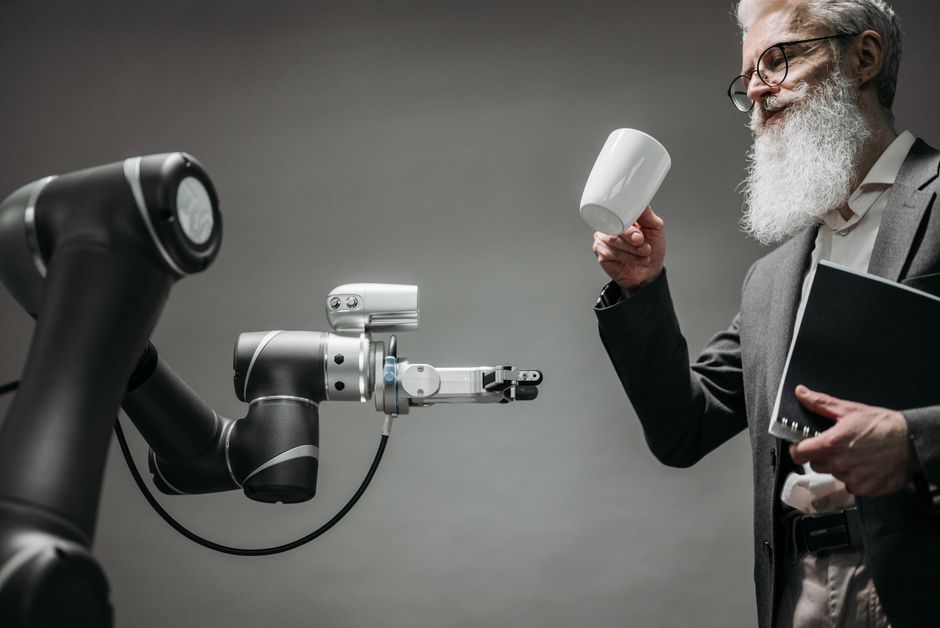
The evolution of Intelligent Automation represents one of the most significant technological shifts of our generation, combining robotic process automation with advanced cognitive technologies to create systems that not only execute tasks but also understand context, predict outcomes, and continuously improve performance. Over the next three to five years, we can expect these capabilities to mature dramatically, fundamentally altering competitive dynamics across industries and creating new paradigms for operational excellence.
The Rise of Autonomous Decision-Making Systems
By 2028, Intelligent Automation platforms will increasingly incorporate autonomous decision-making capabilities that extend beyond rule-based logic into probabilistic reasoning and contextual judgment. These systems will analyze vast datasets in real-time, identifying patterns and anomalies that human analysts might miss, then taking appropriate actions without requiring constant human oversight. Financial institutions are already piloting systems that can autonomously approve loan applications, adjust risk parameters, and rebalance investment portfolios based on market conditions and individual customer profiles.
Manufacturing environments will see autonomous systems managing entire production lines, dynamically adjusting processes based on quality metrics, equipment performance, and supply chain variables. These systems will predict equipment failures before they occur, automatically schedule maintenance, and reconfigure production sequences to optimize throughput and minimize waste. The integration of Internet of Things sensors with intelligent automation platforms will create feedback loops that enable continuous process refinement without human intervention.
Healthcare organizations will deploy autonomous diagnostic systems that analyze medical imaging, patient histories, and genomic data to identify diseases at earlier stages than current protocols allow. These systems won't replace physicians but will serve as powerful decision-support tools, flagging anomalies and suggesting treatment protocols while learning from outcomes to improve future recommendations. The combination of automation with clinical expertise promises to enhance both the speed and accuracy of medical care delivery.
Hyperautomation and End-to-End Process Integration
The next evolution of Intelligent Automation involves what industry analysts term "hyperautomation" – the orchestrated use of multiple automation technologies to automate virtually every process within an organization. Rather than automating individual tasks in isolation, hyperautomation creates seamless workflows that span departments, systems, and even organizational boundaries. By 2029, leading enterprises will have automated 70-80% of their routine business processes, freeing knowledge workers to focus on strategic initiatives and complex problem-solving.
This comprehensive approach to automation requires sophisticated integration capabilities that can connect legacy systems, cloud applications, and modern microservices architectures. API-first design principles and intelligent middleware will enable automation platforms to orchestrate processes across diverse technology stacks without requiring extensive custom coding. Natural language processing interfaces will allow business users to design and modify automated workflows using conversational commands rather than programming languages.
Customer service organizations will exemplify this trend, with intelligent automation handling the entire customer journey from initial inquiry through problem resolution and follow-up satisfaction surveys. These systems will seamlessly hand off complex issues to human agents when needed, providing complete context and suggested solutions. The result will be faster resolution times, higher customer satisfaction, and reduced operational costs across the board.
Ethical AI and Governance Frameworks for Project Delivery
As Intelligent Automation systems gain greater autonomy and influence over business outcomes, establishing robust governance frameworks becomes paramount. By 2030, regulatory requirements around AI transparency, fairness, and accountability will shape how organizations deploy automation technologies. Companies will need to demonstrate that their automated systems make decisions free from bias, maintain audit trails showing how conclusions were reached, and include appropriate human oversight mechanisms for high-stakes decisions.
Industry standards for ethical automation will emerge, covering data privacy, algorithmic transparency, and accountability structures. Organizations will establish AI ethics committees tasked with reviewing automation initiatives to ensure they align with corporate values and societal expectations. This governance layer won't impede innovation but will ensure that Project Delivery accelerates in responsible, sustainable directions that build stakeholder trust rather than eroding it.
The concept of "explainable AI" will become a fundamental requirement for enterprise automation platforms. Systems will need to articulate their reasoning processes in terms business stakeholders can understand, enabling leaders to validate decisions and identify potential issues before they cascade through operations. This transparency will be especially critical in regulated industries like healthcare, finance, and energy where automated decisions carry significant consequences.
Democratization Through Low-Code and No-Code Platforms
One of the most transformative trends in Intelligent Automation will be the democratization of automation capabilities through low-code and no-code development platforms. By 2029, business analysts and department managers without formal programming training will be creating sophisticated automated workflows using visual development environments and pre-built components. This democratization will dramatically accelerate automation adoption as organizations overcome the bottleneck of limited IT resources.
These platforms will incorporate AI assistants that guide users through workflow design, suggest optimizations, and automatically generate the underlying code to implement business logic. Natural language interfaces will allow users to describe desired outcomes in plain English, with the system translating these descriptions into functioning automation scripts. The barrier between business requirements and technical implementation will essentially disappear for many common automation scenarios.
However, this democratization will also create new challenges around governance and quality control. Organizations will need to establish centers of excellence that define standards, review citizen-developed automations, and ensure solutions integrate properly with enterprise architecture. The most successful companies will balance empowerment with appropriate oversight, enabling innovation while maintaining operational integrity.
Integration with Emerging Technologies
The future of Intelligent Automation lies not in isolation but in convergence with other emerging technologies creating compound innovation effects. Quantum computing will eventually enable automation systems to solve optimization problems that are currently intractable, such as real-time supply chain optimization across global networks or molecular simulation for drug discovery. While mainstream quantum applications remain several years away, forward-thinking organizations are already exploring hybrid classical-quantum approaches to complex automation challenges.
Blockchain technology will integrate with automation platforms to create tamper-proof audit trails and enable trustless automation across organizational boundaries. Smart contracts will trigger automated processes when predefined conditions are met, enabling new forms of inter-organizational collaboration without requiring extensive legal agreements or intermediary oversight. This combination will be particularly transformative for supply chain management and financial services.
Edge computing will push Intelligent Automation capabilities closer to data sources, enabling real-time decision-making in environments where latency to centralized cloud systems is unacceptable. Autonomous vehicles, industrial robotics, and remote operations in mining or energy sectors will all benefit from automation intelligence deployed at the edge. The combination of local processing with cloud-based learning and model updates will create hybrid architectures that optimize for both responsiveness and continuous improvement.
Workforce Evolution and the Human-Automation Partnership
Perhaps the most significant trend will be the evolution of workforce models to embrace human-automation collaboration as the default operating paradigm. Rather than viewing automation as a replacement for human workers, leading organizations will design roles that leverage the complementary strengths of both. Humans will focus on creative problem-solving, relationship building, strategic thinking, and handling novel situations, while automation handles repetitive tasks, data processing, and routine decision-making.
This partnership will require significant investment in workforce development and reskilling initiatives. By 2030, the most in-demand skills will include automation literacy, data interpretation, critical thinking, and emotional intelligence – capabilities that complement rather than compete with Intelligent Automation. Organizations that successfully navigate this transition will create more engaging work environments where employees spend their time on meaningful, value-creating activities rather than repetitive tasks.
The concept of a Strategic Blueprint for workforce development will become essential, mapping how roles will evolve as automation capabilities mature and identifying the skills employees need to thrive in this new environment. Progressive companies are already implementing continuous learning programs that prepare workers for this future, ensuring that technological advancement creates opportunity rather than displacement.
Conclusion
The trajectory of Intelligent Automation over the next three to five years promises to fundamentally reshape how organizations operate, compete, and create value. From autonomous decision-making and hyperautomation to ethical governance frameworks and democratized development tools, these trends will collectively drive unprecedented productivity gains and operational transformation. Success in this evolving landscape requires more than simply adopting new technologies; it demands strategic vision, thoughtful governance, and commitment to developing both technological and human capabilities in concert. Organizations that approach this transformation holistically – investing in robust Enterprise AI Solutions while simultaneously preparing their workforce and establishing appropriate oversight mechanisms – will emerge as the leaders of the next business era, equipped to navigate complexity and uncertainty with unprecedented agility and intelligence.


Comments
Post a Comment