The Future of AI Complaint Management: Predictions and Trends for 2026-2031
The landscape of customer complaint handling is undergoing a seismic transformation. As businesses grapple with escalating customer expectations and the volume of feedback channels multiplying exponentially, traditional complaint management systems are proving inadequate. The convergence of advanced artificial intelligence, natural language processing, and predictive analytics is creating new paradigms for how organizations identify, categorize, and resolve customer grievances. Looking ahead to the next three to five years, the trajectory of these technologies promises to fundamentally reshape not just complaint resolution workflows, but the entire customer experience ecosystem.
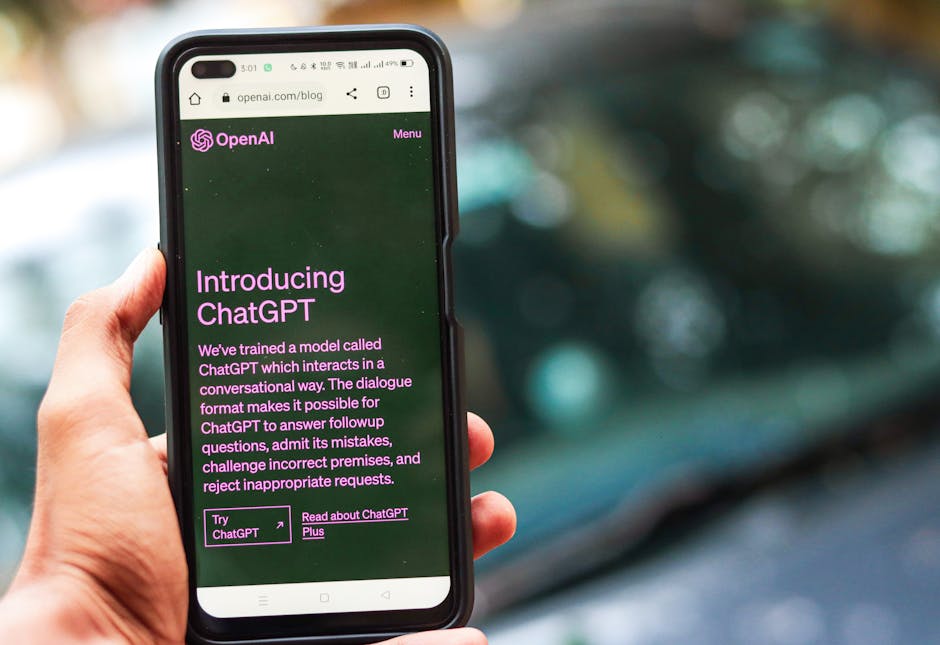
The evolution toward sophisticated AI Complaint Management systems represents more than incremental improvement—it signals a fundamental reimagining of customer service operations. Organizations that understand and prepare for these emerging trends will gain substantial competitive advantages, while those that lag risk irreparable damage to customer loyalty and brand reputation. The question is no longer whether to adopt AI-powered complaint systems, but rather how to strategically position for the innovations that will define the next half-decade.
Predictive Complaint Prevention: From Reactive to Proactive
By 2028, leading organizations will have largely abandoned reactive complaint management in favor of predictive prevention systems. Advanced AI Complaint Management platforms will analyze customer behavior patterns, product usage data, and historical complaint trends to identify potential issues before customers even recognize problems themselves. Machine learning algorithms will process millions of data points across touchpoints—from website navigation patterns to product telemetry—flagging anomalies that historically precede complaint submissions.
These predictive systems will trigger automated interventions tailored to individual customer contexts. For instance, if usage patterns suggest a customer is struggling with a software feature that typically generates complaints within 72 hours, the system will proactively deploy targeted tutorials, offer live assistance, or adjust the user interface dynamically. This shift from complaint resolution to complaint prevention represents a fundamental evolution in Customer Service Automation philosophy.
The economic implications are profound. Current research suggests that preventing a complaint costs approximately one-tenth of resolving it post-submission when factoring in customer effort, agent time, and potential churn. Organizations implementing predictive complaint prevention by 2027 are projected to reduce complaint volumes by 35-50% while simultaneously improving customer satisfaction scores. The technology enabling this transformation—combining behavioral analytics, sentiment prediction models, and automated intervention systems—is already emerging in pilot programs across financial services and telecommunications sectors.
Hyper-Personalized Resolution Pathways
The coming years will witness AI Complaint Management systems that craft individualized resolution journeys for each customer based on comprehensive profile analysis. Rather than routing complaints through standardized tiers, next-generation platforms will evaluate dozens of variables simultaneously: customer lifetime value, communication style preferences, past interaction history, emotional state indicators, complexity of the issue, and optimal resolution pathway probability matrices.
Adaptive Communication Styles
Advanced natural language generation systems will adapt not just message content but communication style to match individual customer preferences. Some customers prefer detailed technical explanations; others want concise acknowledgment and rapid action. AI systems in 2029 will dynamically adjust vocabulary complexity, message length, formality levels, and even emoji usage based on learned preferences from previous interactions and real-time sentiment analysis during the current conversation.
Dynamic Resolution Options
Rather than presenting fixed resolution options, future AI Complaint Management platforms will generate customized remedy proposals optimized for both customer satisfaction and organizational efficiency. The system might offer a high-value customer an immediate replacement with expedited shipping, while proposing a detailed troubleshooting guide with incentive credits to a price-sensitive customer who previously expressed preference for self-service solutions. These decisions will occur in milliseconds, powered by reinforcement learning models continuously optimized through millions of resolution outcomes.
Multimodal Complaint Intelligence and Cross-Channel Synthesis
By 2030, AI Implementation Strategies will prioritize seamless integration across an expanding array of complaint channels. Customers increasingly express dissatisfaction through fragmented touchpoints—a frustrated tweet, an abandoned shopping cart, a tersely-worded chat message, a product return without explanation, and a one-star review posted days later might all relate to a single underlying issue. Current systems treat these as discrete events; future AI Complaint Management platforms will synthesize them into unified complaint narratives.
Voice analysis technology will detect frustration in call center interactions even when customers don't explicitly complain, automatically flagging these conversations for proactive follow-up. Computer vision systems will analyze product return images to identify defect patterns before customers articulate problems verbally. Sentiment analysis will monitor social media for brand mentions indicating dissatisfaction, correlating them with transaction records and customer profiles to generate comprehensive complaint contexts before formal complaints are even filed.
This multimodal intelligence will enable what industry analysts are calling "silent complaint resolution"—addressing customer dissatisfaction that never manifests as explicit complaints. Retail analytics suggest that for every customer who formally complains, seven others experience dissatisfaction but never report it. Advanced Complaint Resolution AI will identify and address this silent majority through pattern recognition across behavioral signals, potentially transforming customer retention economics.
Autonomous Resolution with Human-in-the-Loop Governance
The trajectory toward fully autonomous complaint resolution is accelerating, but with important guardrails. By 2029, AI Complaint Management systems are projected to autonomously resolve 70-80% of routine complaints from initial contact through final resolution, including issuing refunds, arranging replacements, applying account credits, or coordinating service appointments—all without human agent involvement.
However, the most sophisticated implementations will incorporate "human-in-the-loop" governance models for edge cases and high-stakes decisions. When AI confidence scores fall below defined thresholds, when resolution costs exceed specified limits, or when customer emotional distress indicators reach critical levels, systems will seamlessly transition to human specialists. Critically, these agents will receive comprehensive AI-generated briefs including complaint analysis, resolution recommendations with probability-weighted outcomes, customer psychological profiles, and suggested communication approaches.
Continuous Learning Architectures
Future AI Complaint Management platforms will implement continuous learning loops where every resolution outcome—successful or unsuccessful—feeds back into model improvement. Unlike current systems requiring periodic retraining, next-generation architectures will incorporate online learning capabilities, adjusting decision parameters in near-real-time based on resolution effectiveness data. This creates compound improvement trajectories where systems become exponentially more effective over time.
Regulatory Compliance and Ethical AI Frameworks
As AI systems assume greater autonomy in complaint handling, regulatory frameworks will evolve substantially between 2026 and 2031. Industry experts anticipate comprehensive AI governance requirements emerging across major markets, mandating transparency in automated decision-making, establishing customer rights to human review, and setting standards for algorithmic fairness in complaint prioritization and resolution.
Forward-thinking organizations are already implementing "explainable AI" architectures that can articulate resolution reasoning in human-understandable terms. When a customer asks why they received a particular resolution offer, the system can explain the factors considered and the logic applied, rather than presenting decisions as algorithmic black boxes. This transparency will transition from competitive differentiator to regulatory requirement by 2028 in most developed markets.
Bias detection and mitigation will become central to AI Complaint Management system design. Emerging standards will require regular algorithmic audits ensuring that resolution quality, response times, and remedy generosity don't vary based on protected demographic characteristics. Organizations that proactively address these ethical dimensions will avoid regulatory penalties while building stronger customer trust.
Integration with Broader Business Intelligence Ecosystems
The next evolution phase will see AI Complaint Management systems functioning as strategic business intelligence hubs rather than isolated customer service tools. Complaint data contains invaluable signals about product defects, process failures, market positioning gaps, and competitive vulnerabilities. Advanced platforms in 2029 will automatically route complaint intelligence to relevant business functions—flagging recurring product issues to engineering teams, identifying pricing concerns for marketing analysis, or detecting service process bottlenecks for operations optimization.
These integrated ecosystems will close the loop between complaint identification and root cause elimination. Rather than perpetually resolving the same complaint types, organizations will use AI-generated insights to systematically eliminate complaint drivers. Predictive models will forecast complaint volume trends based on planned product launches, pricing changes, or operational adjustments, enabling proactive capacity planning and preventive interventions.
The Rise of Emotional AI and Empathetic Computing
Perhaps the most transformative trend will be the maturation of emotional intelligence in AI Complaint Management systems. Current sentiment analysis provides crude emotional categorization—positive, negative, neutral. Systems emerging by 2030 will recognize nuanced emotional states—frustration versus anger, disappointment versus betrayal, confusion versus helplessness—and adapt responses accordingly with sophisticated empathetic language.
Voice-based systems will analyze vocal tone, pitch variations, speech pace, and pause patterns to assess emotional intensity and authenticity. Text-based platforms will evaluate linguistic markers extending beyond simple sentiment scores to detect sarcasm, desperation, or resignation. Crucially, these systems will be trained not merely to detect emotions but to respond in emotionally intelligent ways that de-escalate tension and rebuild trust.
Research in affective computing suggests that customers interacting with emotionally-responsive AI systems report satisfaction levels approaching or even exceeding interactions with empathetic human agents, particularly when resolution speed and accuracy are superior. This finding challenges longstanding assumptions about the irreplaceable value of human emotional connection in complaint contexts.
Conclusion
The evolution of AI Complaint Management over the next three to five years will fundamentally redefine customer service excellence. Organizations that strategically invest in predictive prevention capabilities, hyper-personalized resolution systems, multimodal intelligence platforms, and emotionally-aware AI will achieve operational efficiency gains while simultaneously elevating customer experience to unprecedented levels. The convergence of these technologies with emerging ethical frameworks and regulatory requirements will separate market leaders from laggards. As these sophisticated complaint management capabilities increasingly intersect with broader business transformation initiatives—including Intelligent Systems revolutionizing industries from manufacturing to fashion—the competitive imperative becomes clear: organizations must begin preparing now for a future where complaint management transcends operational necessity to become a strategic differentiator and primary driver of customer loyalty.


Comments
Post a Comment