The Future of AI Fleet Transformation: Predictions for 2026-2031
The transportation and logistics sectors stand at the precipice of unprecedented change as artificial intelligence continues to reshape how organizations manage and optimize their vehicle fleets. As we look toward the horizon from 2026 to 2031, the trajectory of AI Fleet Transformation promises to revolutionize every aspect of fleet operations, from predictive maintenance and route optimization to autonomous vehicle integration and sustainability initiatives. Industry analysts predict that the global market for AI-powered fleet management will exceed $15 billion by 2030, driven by organizations seeking competitive advantages through data-driven decision-making and operational excellence.
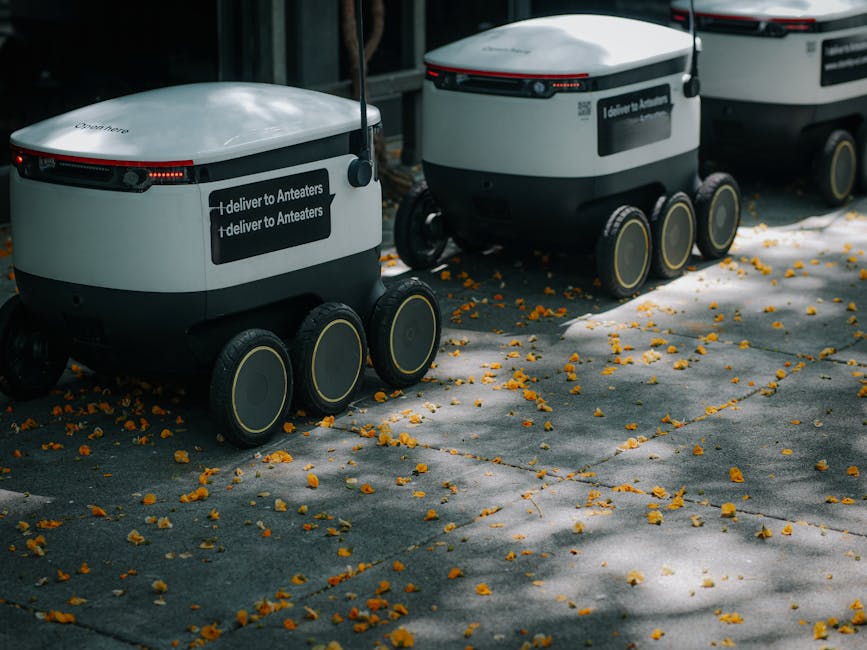
Understanding the future landscape of AI Fleet Transformation requires examining the convergence of multiple technological trends, regulatory shifts, and evolving business requirements. Organizations that position themselves strategically over the next five years will capture significant market share while those that delay adoption risk falling behind competitors who leverage intelligent systems to reduce costs, enhance safety, and deliver superior customer experiences. The pace of innovation continues to accelerate, making forward-looking planning essential for fleet managers, logistics directors, and transportation executives.
Autonomous Fleet Integration: From Pilot to Production
The next three to five years will witness the transition of autonomous vehicles from controlled pilot programs to mainstream fleet operations across multiple industries. By 2028, industry experts project that autonomous trucks will handle approximately 25-30% of long-haul freight in North America, with AI Fleet Transformation serving as the backbone for managing mixed fleets of human-driven and autonomous vehicles. This hybrid operational model will require sophisticated orchestration platforms capable of dynamically allocating tasks based on route complexity, weather conditions, regulatory constraints, and vehicle capabilities.
Fleet operators will invest heavily in AI systems that can seamlessly coordinate between traditional and autonomous assets, optimizing utilization rates while maintaining safety standards. These platforms will employ advanced machine learning algorithms to continuously improve decision-making based on real-world performance data. The integration challenge extends beyond technology to encompass workforce training, insurance frameworks, and customer acceptance strategies that address concerns about autonomous vehicle safety and reliability.
Organizations exploring Fleet Management AI for autonomous integration should anticipate regulatory evolution that will vary significantly by region and application. Urban delivery fleets may achieve higher autonomous penetration earlier than rural operations, while passenger transportation faces distinct regulatory hurdles compared to freight movement. Successful fleet transformation strategies will maintain flexibility to adapt deployment plans as regulatory frameworks mature and technology proves itself in diverse operating conditions.
Predictive Intelligence: From Reactive to Anticipatory Operations
The evolution from reactive maintenance to predictive and ultimately prescriptive fleet management represents one of the most transformative trends in AI Fleet Transformation over the coming years. By 2029, leading fleet operators will deploy AI systems capable of predicting component failures with 95%+ accuracy 30-45 days in advance, enabling proactive part procurement and maintenance scheduling that minimizes downtime and extends vehicle lifespan. These systems will analyze hundreds of data points from vehicle sensors, historical maintenance records, operating conditions, and external factors like weather patterns and road quality.
Advanced neural networks will identify subtle patterns invisible to human analysts, detecting early warning signs of transmission issues, brake wear, or engine degradation before traditional diagnostic systems register problems. This predictive capability will fundamentally change fleet economics by shifting maintenance budgets from emergency repairs to planned interventions, reducing overall costs by 30-40% while improving vehicle availability. Fleet managers will transition from firefighting operational issues to strategic capacity planning and performance optimization.
The implementation of prescriptive analytics will extend beyond maintenance to encompass driver behavior modification, route optimization, and fuel efficiency improvements. Organizations investing in AI solution development will gain capabilities to simulate thousands of operational scenarios, identifying optimal strategies for vehicle deployment, driver scheduling, and resource allocation under varying demand conditions. This simulation-driven approach enables continuous improvement cycles that compound performance gains over time.
Sustainability Integration: Carbon-Neutral Fleet Operations
Environmental regulations and corporate sustainability commitments will drive rapid adoption of AI Fleet Transformation technologies focused on emissions reduction and carbon footprint optimization. By 2030, regulatory frameworks in major markets will mandate detailed carbon accounting for commercial fleets, with penalties for exceeding emissions thresholds and incentives for early achievement of carbon-neutral operations. AI systems will become essential tools for managing this compliance complexity while maintaining operational efficiency and cost-effectiveness.
Fleet operators will deploy sophisticated optimization algorithms that balance multiple objectives simultaneously: minimizing fuel consumption, reducing emissions, maintaining delivery schedules, and controlling operational costs. These multi-objective optimization challenges require computational approaches beyond human capability, with AI systems evaluating millions of potential scenarios to identify Pareto-optimal solutions. Electric vehicle integration will accelerate dramatically, with AI platforms managing charging schedules, range optimization, and battery health monitoring across growing EV fleets.
The transition to sustainable fleet operations will create new data requirements and analytical capabilities. Organizations will need systems that track and attribute emissions across complex supply chains, optimize modal selection between road, rail, and air transport, and identify opportunities for collaborative logistics that reduce overall environmental impact. Automated Fleet Operations powered by AI will enable dynamic rerouting to minimize idling time, optimize vehicle loading to reduce empty miles, and coordinate charging schedules to leverage renewable energy availability.
Edge Computing and Real-Time Decision Intelligence
The proliferation of edge computing capabilities will enable real-time AI Fleet Transformation applications that process data locally on vehicles rather than relying on cloud connectivity. This architectural shift will prove critical for autonomous vehicle safety systems, real-time route optimization in areas with limited connectivity, and immediate response to emergency situations. By 2027, edge AI processors will become standard equipment on commercial vehicles, capable of running sophisticated neural networks that analyze sensor data, make split-second decisions, and coordinate with fleet management systems when connectivity permits.
Edge intelligence will enable new applications previously impossible due to latency constraints. Collision avoidance systems will leverage AI to predict and prevent accidents by analyzing surrounding traffic patterns, road conditions, and vehicle behavior in real-time. Driver assistance systems will provide immediate feedback on unsafe behaviors, fuel-inefficient driving patterns, and route deviations, creating continuous learning loops that improve performance over time.
The combination of edge and cloud computing will create hybrid architectures where tactical decisions occur locally while strategic optimization happens centrally. This distributed intelligence model will improve system resilience, reduce bandwidth requirements, and enable operations in connectivity-challenged environments. Fleet managers will gain visibility into vehicle and driver performance at unprecedented granularity while maintaining the ability to make system-wide optimizations across entire fleets.
Workforce Transformation and Human-AI Collaboration
The evolution of AI Fleet Transformation will fundamentally reshape workforce requirements and skill sets over the next five years. Rather than wholesale job replacement, the industry will witness role transformation where human workers collaborate with AI systems to achieve outcomes impossible for either to accomplish independently. Fleet managers will evolve from operational supervisors to strategic orchestrators who interpret AI recommendations, make judgment calls on edge cases, and continuously improve system performance through feedback loops.
Organizations will invest heavily in workforce development programs that prepare employees for AI-augmented roles. Drivers will require training on autonomous vehicle oversight, understanding when to intervene in automated systems, and interpreting AI-generated recommendations for route selection and fuel efficiency. Maintenance technicians will transition from reactive troubleshooting to predictive maintenance planning, working with AI diagnostics to optimize intervention timing and resource allocation.
The human element will remain critical for handling exceptions, managing customer relationships, and making ethical decisions that balance competing priorities. Successful fleet transformation strategies will emphasize human-AI partnership rather than replacement, designing workflows that leverage AI computational power while preserving human judgment, creativity, and contextual understanding. This collaborative approach will drive higher employee satisfaction and retention while maximizing the value of AI investments.
Conclusion: Positioning for the AI-Driven Future
The next three to five years represent a critical window for organizations to position themselves advantageously in the rapidly evolving landscape of AI Fleet Transformation. Industry leaders will distinguish themselves through strategic investments in predictive analytics, autonomous vehicle integration, sustainability optimization, and workforce development that create compounding competitive advantages. The transformation extends beyond technology adoption to encompass organizational culture, operational processes, and partnership ecosystems that enable continuous innovation and adaptation to emerging opportunities. Organizations that embrace Intelligent Automation as a strategic imperative rather than a tactical project will capture disproportionate value as the industry undergoes its most significant transformation in generations, establishing market leadership positions that persist well beyond 2031.


Comments
Post a Comment