AI Customer Experience: Step-by-Step Implementation for PE Firms
Private equity firms have long focused on traditional value creation levers—cost optimization, revenue growth, strategic acquisitions—but an emerging opportunity remains underutilized: transforming how portfolio companies interact with their customers through artificial intelligence. As LP expectations rise and exit multiples compress, the ability to demonstrate measurable improvements in customer satisfaction, retention, and lifetime value has become a critical differentiator. This guide walks through the practical, sequential steps for implementing AI-powered customer experience enhancements across your portfolio, from initial assessment to measurable ROI.
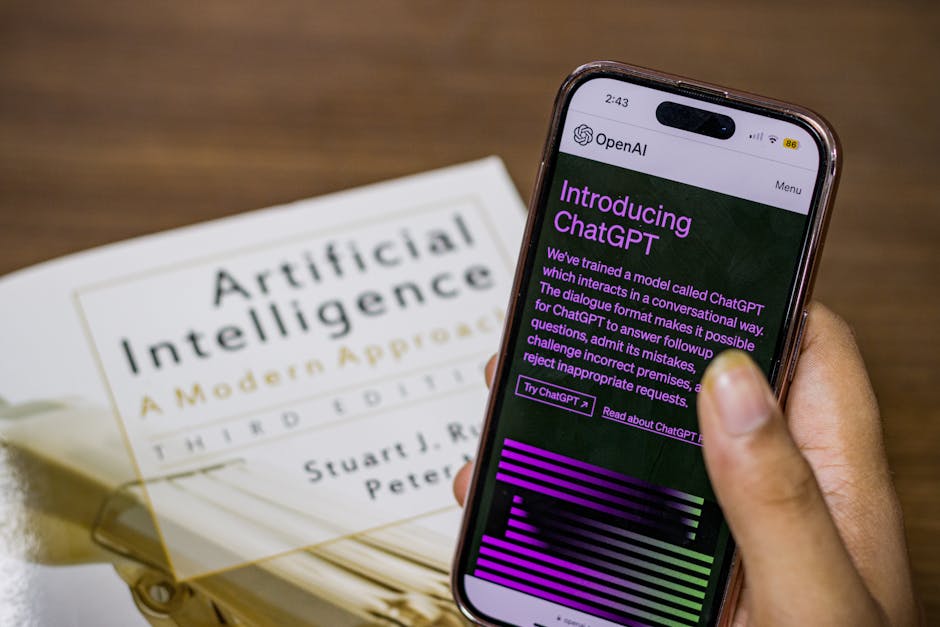
The integration of AI Customer Experience capabilities represents one of the most tangible ways to accelerate value creation in the compressed holding periods that characterize modern private equity. Unlike infrastructure overhauls or market expansion strategies that require years to mature, customer experience improvements powered by AI can deliver measurable results within quarters, directly impacting the metrics that drive exit valuations. For firms managing diverse portfolios across sectors, a systematic implementation framework ensures consistency while allowing for the customization that different business models demand.
Step 1: Conduct a Portfolio-Wide CX Maturity Assessment
Before deploying any AI Customer Experience technology, establish a baseline understanding of where each portfolio company stands in customer experience capabilities. This assessment should evaluate current customer touchpoints, existing technology infrastructure, data quality and availability, customer satisfaction metrics, and the organizational readiness for change. In our experience working with firms similar to Blackstone and KKR, the maturity spectrum typically ranges from companies still relying on manual call centers and email-based support to those with basic CRM systems but limited automation.
Create a standardized scorecard that measures five dimensions: data infrastructure (Can customer interaction data be captured and accessed?), current CX metrics (NPS, CSAT, customer effort scores), technology stack compatibility (APIs, integration capabilities), team capabilities (technical literacy, change management capacity), and financial impact potential (customer lifetime value, churn rates, support cost per interaction). Assign each portfolio company a maturity score from 1 to 5 across these dimensions. This assessment typically requires 2-3 weeks per company and should involve interviews with customer service leaders, CTO or technology teams, and a review of existing customer data.
The output of this assessment becomes your prioritization matrix. Companies scoring high on data infrastructure and financial impact potential but low on current capabilities represent your best initial candidates. These are businesses where AI Customer Experience interventions can deliver rapid wins that demonstrate value to the broader portfolio. Document the findings in a format that your investment committees understand: potential IRR impact, implementation cost, timeline to first measurable results, and risk factors.
Step 2: Design the AI Customer Experience Architecture
With priority companies identified, the next step involves architecting the specific AI capabilities that will drive customer experience transformation. This is not about implementing every possible AI feature but rather selecting the interventions that align with each company's specific customer journey pain points and business model. The architecture should address three layers: the interaction layer (how customers engage), the intelligence layer (how AI processes and responds), and the integration layer (how the system connects to existing business processes).
For the interaction layer, determine which customer touchpoints will be AI-enabled first. Common starting points include chatbots for tier-1 support queries, intelligent email routing and response suggestion systems, voice-based virtual assistants for phone support, and predictive outreach systems that identify customers likely to churn or upgrade. The key is matching the interaction type to customer preferences in your specific sector—B2B software companies may prioritize email and chat, while consumer businesses might focus on voice and mobile app interactions.
The intelligence layer defines what the AI actually does. Modern AI Customer Experience systems should incorporate natural language processing for understanding customer intent, sentiment analysis to detect frustration or satisfaction, predictive modeling to anticipate customer needs, recommendation engines for next-best-action guidance, and conversation summarization for agent assistance. When designing this layer, partner with technology providers who offer enterprise AI development capabilities that can be customized to your portfolio company's specific domain, rather than generic off-the-shelf solutions that require extensive reconfiguration.
The integration layer is where many implementations fail. AI Customer Experience systems must connect bidirectionally with CRM platforms (Salesforce, HubSpot), support ticketing systems (Zendesk, ServiceNow), knowledge bases and documentation repositories, transaction and order management systems, and analytics platforms. Map out these integration points explicitly, identify API availability, and plan for data transformation requirements. Budget 30-40% of your total implementation timeline for integration work—it consistently takes longer than vendors estimate.
Step 3: Execute a Controlled Pilot Implementation
Rather than rolling out AI Customer Experience capabilities across an entire customer base simultaneously, structure a controlled pilot that allows for learning and iteration. Select a specific customer segment, product line, or geographic region that represents 10-15% of total customer interactions but is representative of the broader customer base. Define clear success metrics before launch: target improvements in first-contact resolution rates, average handling time, customer satisfaction scores, cost per interaction, and agent productivity metrics.
The pilot typically runs for 60-90 days and should include three distinct phases. Weeks 1-3 focus on deployment and stabilization—getting the system live, fixing immediate technical issues, and training customer service teams on the new tools. Weeks 4-8 represent the learning phase where you monitor AI performance, gather customer and agent feedback, and make iterative improvements to conversation flows, response accuracy, and routing logic. Weeks 9-12 constitute the optimization phase where you implement lessons learned and begin measuring against your success criteria.
Throughout the pilot, maintain close collaboration between your deal team, the portfolio company's leadership, the implementation partner, and front-line customer service staff. Weekly review sessions should examine both quantitative metrics and qualitative feedback. Pay particular attention to edge cases where the AI fails—these reveal gaps in training data, logic flaws in conversation design, or integration issues that will cause problems at scale. Document these learnings rigorously; they become invaluable when rolling out AI Customer Experience capabilities to other portfolio companies.
Step 4: Scale Across Customer Base and Portfolio
With a successful pilot demonstrating measurable improvements, proceed to full-scale implementation. This involves expanding the AI Customer Experience system to handle all customer interactions within the pilot company, then adapting the approach for additional portfolio companies. Scaling introduces new challenges: handling peak volume periods, managing a larger variety of customer queries, maintaining performance as the knowledge base expands, and sustaining the system as customer needs evolve.
Establish a center of excellence model that captures best practices across implementations. This team—typically 2-3 people dedicated to AI Customer Experience across your portfolio—maintains documentation of what works, facilitates knowledge sharing between portfolio companies, negotiates enterprise-level agreements with technology vendors for better pricing, and monitors ongoing performance across implementations. They also conduct quarterly reviews with each portfolio company to assess whether AI Due Diligence processes are identifying new opportunities for enhancement and whether Portfolio Management AI tools are capturing the value creation accurately.
As you scale, measure the financial impact rigorously. Calculate the change in customer lifetime value for customers who interact with AI-enhanced support versus traditional channels. Quantify the reduction in support costs per interaction. Track changes in Net Promoter Score and customer retention rates. These metrics directly inform your exit narratives and should be documented in the same format your investment committees use for other value creation initiatives. Private equity buyers increasingly expect to see evidence of modern customer engagement capabilities during due diligence, and a well-documented AI Customer Experience implementation becomes a selling point that can influence valuation multiples.
Step 5: Integrate CX Data into Portfolio Management and Future Deal Flow
The final step transforms AI Customer Experience from a portfolio company initiative into a firm-wide strategic capability. Use the customer interaction data and insights generated by these systems to inform your ongoing portfolio management decisions and your evaluation of potential new investments. The voice-of-customer data captured through AI systems reveals early warning signs of market shifts, competitive threats, product quality issues, and growth opportunities that traditional financial metrics detect only with a lag.
Incorporate customer experience metrics into your standard portfolio company dashboards alongside revenue, EBITDA, and cash flow. Establish thresholds that trigger deeper investigation: a 10% decline in customer sentiment scores, increasing mentions of specific competitor names in support conversations, or rising effort scores indicating product usability problems. These signals often predict financial performance changes quarters before they appear in management reports. For your investment teams conducting due diligence on new deals, develop a customer experience assessment framework that evaluates target companies' CX maturity, identifies quick-win opportunities for AI implementation, and quantifies the potential value creation from customer experience transformation.
Looking across our portfolio implementations, firms that systematically apply AI Customer Experience capabilities typically see 15-30% reductions in customer support costs, 20-40% improvements in first-contact resolution, and 5-15 point increases in Net Promoter Scores within the first year. More importantly, these improvements translate to measurable increases in customer lifetime value and retention rates—metrics that directly impact exit multiples in quality-of-revenue-focused M&A environments. As PE holding periods compress and traditional operational improvement playbooks become table stakes, sophisticated Private Equity AI Solutions that enhance how portfolio companies engage with their customers represent an increasingly important differentiation point in competitive exits.
Conclusion
Implementing AI-powered customer experience capabilities across a private equity portfolio requires a systematic, step-by-step approach that balances speed to value with the rigor necessary for sustainable results. By following this framework—comprehensive assessment, thoughtful architecture design, controlled pilots, measured scaling, and integration into core portfolio management—firms can transform customer experience from a soft concept into a quantifiable value creation lever. The key is treating this not as a technology project but as a strategic initiative that touches customer retention, revenue quality, operational efficiency, and ultimately exit valuation. For PE firms seeking to maximize returns in an environment of elevated purchase multiples and increasing competition for quality assets, Private Equity AI Solutions focused on customer experience provide a differentiated path to alpha generation that complements traditional operational improvement strategies while addressing the market dynamics that increasingly reward companies with demonstrably superior customer relationships.


Comments
Post a Comment