AI-Driven Production Excellence: 7 Critical Mistakes to Avoid
The discrete manufacturing sector stands at an inflection point. Companies like Siemens and General Electric are transforming their production floors with intelligent systems, while others struggle with failed implementations and underwhelming returns. The difference often comes down to avoidable strategic errors. As manufacturing executives face mounting pressure to reduce production costs while improving First-pass yield and Overall Equipment Effectiveness, artificial intelligence has emerged as the definitive lever for competitive advantage. Yet the path from pilot to production-scale impact remains littered with expensive missteps that can derail transformation initiatives before they deliver measurable value.
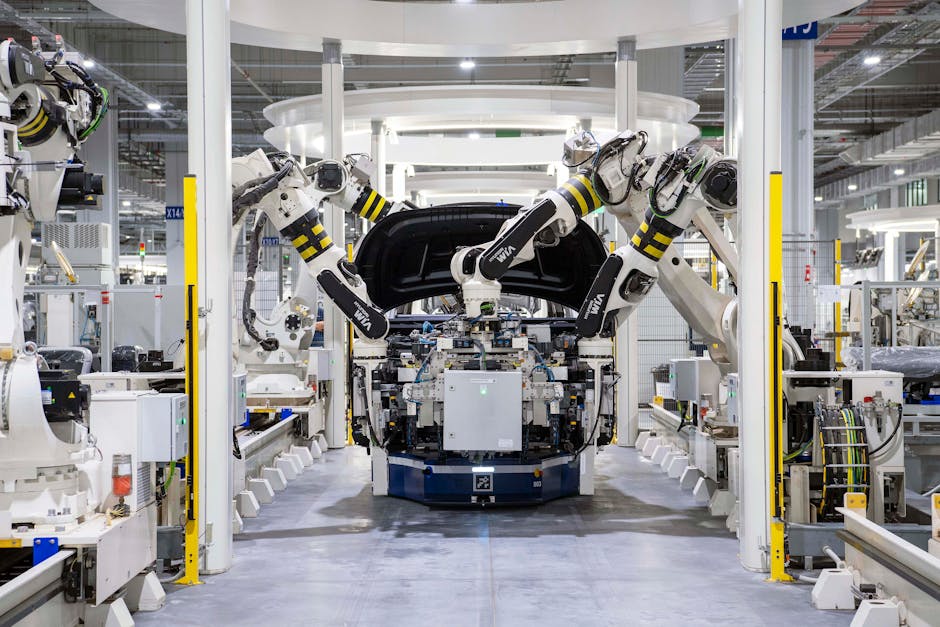
Understanding these implementation pitfalls is essential for any manufacturer serious about AI-Driven Production Excellence. Manufacturing leaders must recognize that the technology itself rarely causes failure—instead, organizational readiness, data foundation, and change management discipline determine whether AI initiatives generate lasting production improvements or become costly write-offs. This analysis identifies seven critical mistakes observed across discrete manufacturing environments and provides concrete guidance for avoiding them.
Mistake #1: Deploying AI Without Clean, Contextualized Manufacturing Data
The most fundamental error in pursuing AI-Driven Production Excellence involves launching initiatives before establishing adequate data infrastructure. Production planners and quality engineers frequently discover that their Manufacturing Execution Systems capture incomplete cycle time data, inconsistent defect codes, or fragmented equipment sensor feeds. When AI models train on this unreliable foundation, they produce predictions that operators rightfully distrust.
A major aerospace components manufacturer learned this lesson after deploying predictive maintenance models that generated excessive false positives. Investigation revealed that equipment sensor data lacked proper timestamp synchronization and operating context—the system could not distinguish normal variance during changeovers from genuine anomalies. The solution required six months of data cleanup and MES integration work before retraining models that finally achieved acceptable precision.
Avoiding this mistake demands rigorous data quality assessment before AI development begins. Manufacturing organizations should audit their Enterprise Resource Planning systems, MES platforms, and quality management databases to identify gaps in coverage, accuracy, and contextual metadata. Bill of materials data must link reliably to production records. Equipment identifiers need consistent naming conventions across facilities. Defect categorization requires standardized taxonomies that quality teams actually use. Only after closing these gaps can AI initiatives build on solid ground.
Mistake #2: Ignoring Production Floor Change Management
Technical excellence means nothing without operator adoption. Many manufacturers deploy sophisticated AI systems that production supervisors and machine operators actively circumvent because implementation teams failed to address workflow integration and trust-building. This mistake becomes especially damaging when AI recommendations conflict with experienced operators' intuition without explanation.
One industrial equipment manufacturer implemented an AI system for production scheduling optimization that theoretically improved throughput by eighteen percent. Operators found the system's job sequencing recommendations nonsensical because the AI lacked awareness of tooling constraints and setup dependencies that veteran schedulers understood implicitly. Within three weeks, production planners reverted to manual scheduling, and the AI initiative stalled. The core problem was not algorithmic—it was the absence of operator involvement during development and inadequate explanation of how the system made decisions.
Successful Manufacturing Process Optimization through AI requires systematic change management that treats production floor personnel as essential stakeholders, not implementation obstacles. This means involving machine operators and process engineers in pilot design, creating feedback mechanisms that capture frontline insights, and building explanation interfaces that show why the AI recommends specific actions. When Caterpillar deployed AI for quality prediction in their engine manufacturing lines, they embedded quality engineers in the development process and created visual dashboards showing which process parameters drove each prediction. This transparency built trust that enabled sustained adoption.
Mistake #3: Pursuing Broad Scope Before Proving Narrow Value
Ambition becomes liability when manufacturers attempt enterprise-wide AI deployment without first demonstrating concrete value in focused applications. The impulse to "transform everything" leads to diffused resources, prolonged timelines, and stakeholder fatigue before delivering measurable production improvements. AI-Driven Production Excellence emerges from accumulated wins in specific use cases, not grand visions.
A diversified manufacturer attempted simultaneous AI implementation across demand forecasting, production scheduling, quality prediction, and maintenance optimization. Two years and substantial investment later, none of the initiatives had reached production deployment. Each workstream encountered unique data challenges and integration complexities that consumed development capacity. Meanwhile, stakeholder confidence eroded as promised benefits failed to materialize.
The alternative approach starts with surgical focus on high-impact, technically feasible opportunities. Select one production line experiencing persistent quality issues or a critical asset class with expensive unplanned downtime. Build a Predictive Maintenance AI solution that demonstrably reduces equipment failures and documents the financial return. Use that success to secure resources for the next priority application. Honeywell's successful AI adoption across their manufacturing operations followed this pattern—starting with specific process optimization opportunities in single facilities before scaling proven approaches enterprise-wide.
Mistake #4: Neglecting Integration with Existing Manufacturing Systems
AI models deliver no value when they operate in isolation from the Manufacturing Execution Systems, Enterprise Resource Planning platforms, and quality management tools that drive daily production decisions. Yet many initiatives treat integration as an afterthought, developing sophisticated algorithms that cannot seamlessly feed insights to the operators and planners who need them. When exploring AI development strategies, manufacturers must prioritize architectural planning that embeds intelligence into existing workflows rather than creating parallel systems.
Consider a precision components manufacturer that built accurate quality prediction models but delivered outputs through a separate analytics portal that quality engineers needed to check manually. Predictive alerts about process drift arrived too late because inspection personnel only reviewed the portal during shift changes. The AI provided correct insights that production systems never acted upon because integration gaps prevented real-time response.
Effective implementations architect AI capabilities as embedded intelligence within manufacturing technology stacks. Predictive maintenance alerts should flow directly into computerized maintenance management systems that trigger work orders. Quality predictions need automatic integration with Statistical Process Control tools that operators monitor continuously. Production optimization recommendations must connect to Manufacturing Resource Planning systems that orchestrate job scheduling. This integration work often consumes more effort than model development but determines whether AI-Driven Production Excellence translates to actual production floor impact.
Mistake #5: Underestimating the Importance of Continuous Model Management
Production environments change constantly—new products enter the mix, equipment ages and receives upgrades, suppliers modify materials, and process parameters shift. AI models trained on historical data gradually lose accuracy unless manufacturers establish disciplined processes for monitoring performance and retraining when needed. This ongoing management requirement catches many organizations unprepared.
A automotive components supplier deployed quality prediction models that initially achieved ninety-two percent accuracy in identifying defects before final inspection. Over eight months, accuracy degraded to seventy-four percent as the production mix shifted toward new part variants the models had never encountered. The manufacturer lacked monitoring infrastructure to detect this performance decline and continued trusting unreliable predictions until quality escapes triggered customer complaints.
Avoiding this mistake requires treating AI models as production assets needing active lifecycle management. Establish automated monitoring that tracks prediction accuracy, input data distribution shifts, and model confidence scores. Define clear thresholds that trigger retraining when performance degrades. Build processes for incorporating new product introductions and process changes into training datasets. Manufacturing organizations pursuing AI-Driven Production Excellence need data science teams that function like maintenance organizations—continuously monitoring system health and performing preventive interventions before failures occur.
Mistake #6: Focusing Solely on Technology While Ignoring Process Redesign
AI implementation should prompt fundamental rethinking of manufacturing processes, not merely automate existing workflows. Organizations that overlay AI onto inefficient processes achieve marginal gains while missing transformation opportunities. Lean manufacturing principles and Value stream mapping should inform AI deployment to eliminate waste and optimize flow, not preserve legacy approaches.
A heavy equipment manufacturer implemented AI-powered production scheduling that optimized job sequencing within their existing batch production approach. They achieved modest throughput improvements but failed to question whether batch processing itself remained optimal. A subsequent value stream analysis revealed that Just-In-Time production principles, enabled by AI-driven demand forecasting and dynamic scheduling, could reduce work-in-process inventory by sixty percent while improving delivery performance. The initial AI implementation optimized the wrong process architecture.
Manufacturing leaders should view AI adoption as an opportunity to challenge fundamental process assumptions. Can Predictive Maintenance AI enable condition-based equipment servicing that eliminates scheduled downtime? Does quality prediction accuracy allow reducing inspection frequency for certain operations? Can demand forecasting precision support smaller batch sizes that improve flow? The Six Sigma methodology of Define-Measure-Analyze-Improve-Control provides a framework for combining process redesign with AI capabilities to achieve breakthrough performance rather than incremental optimization.
Mistake #7: Failing to Establish Clear Value Metrics and Governance
Without rigorous measurement frameworks and executive governance, AI initiatives drift toward technical demonstrations that never connect to business outcomes. Manufacturing organizations must define specific metrics—Overall Equipment Effectiveness improvement, First-pass yield increases, inventory turns acceleration, or production cycle time reduction—and hold AI programs accountable for delivering documented impact.
A manufacturer invested heavily in Manufacturing Process Optimization through AI but struggled to quantify actual results because they had not established baseline measurements or isolated AI contribution from other improvement initiatives. When the CFO questioned ROI during budget reviews, the program team could offer only anecdotal evidence and proxy metrics. Funding cuts followed.
Successful approaches establish clear governance from initiative launch. Define specific production metrics the AI should improve and document baseline performance. Implement control group comparisons or phased rollouts that enable measuring AI impact separately from confounding factors. Create executive steering committees that review progress against defined milestones and make continuation decisions based on demonstrated value rather than technical optimism. When Boeing deploys AI across their manufacturing operations, they maintain rigorous measurement protocols that quantify production improvements and calculate return on investment for each application.
Building Sustainable AI-Driven Production Excellence
These seven mistakes share a common thread—they reflect organizational and strategic failures rather than technical limitations. The discrete manufacturing sector possesses mature processes, rich data, and clear value opportunities that make it ideal for AI application. Companies that avoid these pitfalls by emphasizing data quality, change management discipline, focused scope, systems integration, model governance, process redesign, and rigorous measurement create sustainable competitive advantages through superior production performance.
The path forward requires balanced attention to technology capabilities and organizational readiness. Start with surgical applications that address genuine production pain points. Invest in data infrastructure and MES integration before scaling. Treat production floor personnel as essential partners in design and deployment. Measure relentlessly and adjust based on demonstrated impact. Manufacturing organizations that follow this disciplined approach discover that Generative AI Solutions and broader AI capabilities transform production economics while strengthening quality, agility, and sustainability—the defining characteristics of manufacturing excellence in an increasingly competitive global landscape.


Comments
Post a Comment