AI Inventory Management: A Comprehensive Guide for Retail Professionals
The retail landscape has fundamentally changed. What once required armies of inventory planners armed with spreadsheets and gut instinct now demands precision-driven systems that can process millions of SKU movements in real time. Overstock situations tie up working capital while understock scenarios erode customer trust and revenue. For practitioners navigating inventory forecasting, demand planning, and stock replenishment cycles, the traditional tools are no longer sufficient. The industry has reached an inflection point where artificial intelligence isn't just an advantage—it's becoming the baseline expectation for competitive inventory turnover rates and fill rate performance.
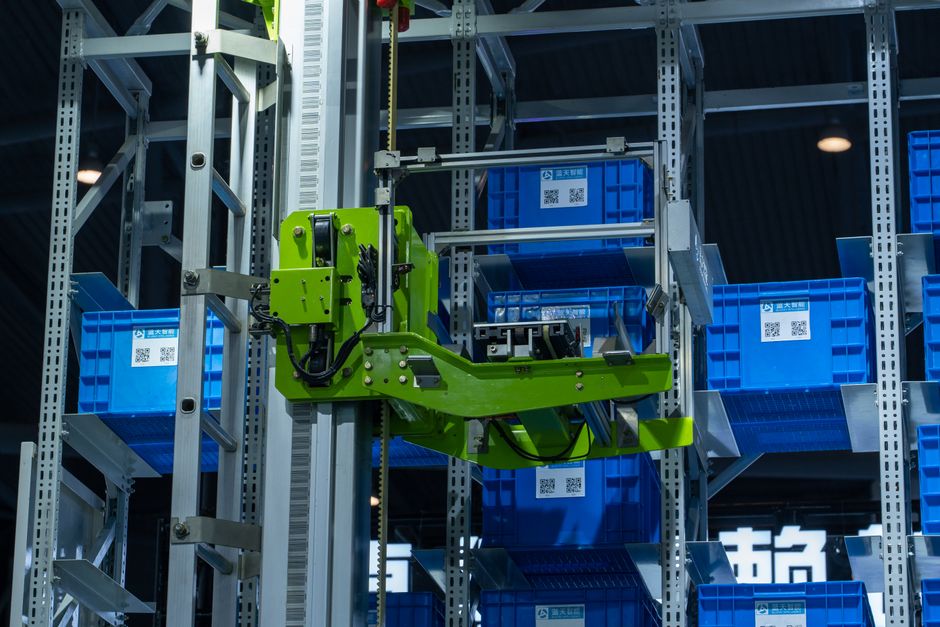
Enter AI Inventory Management, a paradigm shift that replaces reactive counting with predictive intelligence. Instead of waiting for cycle counting to reveal discrepancies or watching safety stock levels drain before triggering purchase orders, AI-powered systems continuously analyze demand signals, supplier lead times, and external variables to maintain optimal inventory positions. For those new to this technology, understanding what AI Inventory Management actually does—and how it differs from legacy warehouse management systems—is the critical first step toward implementation.
What AI Inventory Management Actually Means in Practice
At its core, AI Inventory Management applies machine learning algorithms to the entire inventory lifecycle, from purchase order generation through order fulfillment and returns management. Unlike traditional systems that rely on static reorder points and fixed economic order quantity calculations, AI models continuously learn from actual consumption patterns, seasonal variations, promotional impacts, and supply chain disruptions. When Walmart processes billions of transactions across thousands of locations, AI Inventory Management systems detect micro-trends that would be invisible to human planners—a slight uptick in gardening supplies in specific zip codes three weeks before traditional spring buying, for instance, or emerging preference shifts between product variants that should trigger SKU rationalization decisions.
The technology stack typically includes demand forecasting engines that predict future consumption with far greater accuracy than historical averaging methods, inventory optimization algorithms that calculate ideal stock levels for each location and SKU combination, and automated replenishment systems that generate purchase orders without human intervention. These components work together to address the fundamental tension in inventory management: carrying enough stock to meet customer demand without accumulating excess inventory that increases carrying costs and risks obsolescence.
The Core Components That Drive Results
Modern AI Inventory Management platforms integrate several specialized capabilities. Demand Planning AI analyzes point-of-sale data, weather patterns, economic indicators, social media trends, and competitive pricing to forecast demand at granular levels—not just category-wide projections, but specific predictions for individual SKUs at individual locations. Inventory Forecasting AI then translates these demand predictions into optimal stock positions, accounting for supplier lead times, minimum order quantities, storage constraints, and target service levels.
- Predictive demand modeling that incorporates hundreds of variables beyond historical sales data
- Dynamic safety stock calculation that adjusts based on demand volatility and supply reliability
- Automated exception management that flags anomalies requiring human review
- Vendor collaboration portals that share forecasts and synchronize replenishment schedules
- Real-time inventory accuracy monitoring that reconciles physical counts with system records
Why This Technology Matters Now More Than Ever
The business case for AI Inventory Management has become compelling as retail complexity has exploded. Target manages over 200,000 SKUs across multiple fulfillment channels—stores, distribution centers, and direct-to-consumer shipments. Each SKU has unique demand patterns, shelf life considerations, and supplier relationships. Traditional methods of setting reorder points and safety stock levels cannot handle this complexity without either chronic stockouts or massive overstock positions. The financial impact is measured in hundreds of millions of dollars of working capital efficiency and lost sales prevention.
Beyond financial metrics, customer expectations have fundamentally shifted. Amazon's same-day and next-day delivery promises have reset the baseline for availability. When a customer searches for a product, they expect it to be in stock, available for immediate purchase, and deliverable within days if not hours. Achieving these fill rates across diverse product portfolios requires inventory systems that can predict demand spikes, preposition inventory near demand centers, and rebalance stock between locations—all automatically and continuously. Manual processes simply cannot operate at the required speed and scale.
Getting Started: The Practical Implementation Path
For organizations beginning their AI Inventory Management journey, the path typically starts with data foundation work. AI models require clean, consistent data feeds from point-of-sale systems, warehouse management platforms, supplier portals, and external sources. Many retailers discover that their inventory data quality is insufficient—SKU descriptions are inconsistent, location hierarchies are poorly maintained, or historical demand data is fragmented across systems. Addressing these data quality issues often consumes 40-50% of initial implementation effort but is absolutely essential for model accuracy.
The next phase involves selecting appropriate use cases for initial deployment. Rather than attempting to transform the entire inventory operation simultaneously, successful implementations typically begin with specific pain points. A common starting point is slow-moving inventory identification and liquidation optimization—using AI to predict which items will never sell at full price and should be marked down proactively. Another frequent entry point is promotional demand forecasting, where AI models predict the demand impact of price reductions, display placements, and advertising campaigns with far greater accuracy than historical lift factors.
Building the Right Team and Capabilities
Implementation requires a cross-functional team that bridges inventory planning, data science, IT infrastructure, and vendor management. The inventory planning team provides domain expertise about demand patterns, supplier constraints, and operational workflows. They define the business rules and constraints that AI models must respect—for instance, minimum display quantities for certain categories or restrictions on mixing products in warehouse locations. Leveraging platforms for AI solution development can accelerate this process by providing pre-built components and frameworks specifically designed for inventory optimization use cases.
Data scientists develop and tune the machine learning models, selecting appropriate algorithms for different prediction tasks. Demand forecasting might use time series models like ARIMA or Prophet for stable categories, while deep learning approaches handle complex seasonal patterns or new product introductions with limited history. The IT team ensures data integration, system performance, and security compliance. Vendor management stakeholders participate because effective AI Inventory Management requires supplier collaboration—sharing forecasts, synchronizing production schedules, and establishing flexible replenishment agreements that allow the AI system to adjust order quantities and timing dynamically.
Measuring Success and Iterating Toward Excellence
Once initial systems are operational, disciplined measurement becomes critical. The primary metrics for AI Inventory Management effectiveness include forecast accuracy (measured as mean absolute percentage error or weighted mean absolute percentage error), inventory turnover rates, fill rate achievement, carrying cost reduction, and stockout frequency. Leading retailers establish baseline measurements before AI deployment and track improvement trends monthly. Walmart, for instance, reportedly improved inventory turnover by 10-15% through AI-driven demand forecasting and dynamic replenishment, freeing up billions in working capital while simultaneously improving in-stock positions.
Equally important is monitoring model performance degradation. AI models trained on pre-pandemic demand patterns failed spectacularly when consumer behavior shifted dramatically in 2020-2021. Effective AI Inventory Management includes automated model monitoring that detects when prediction accuracy degrades and triggers retraining workflows. Some organizations retrain models weekly or even daily, ensuring predictions reflect the most current demand signals. Others implement A/B testing frameworks where human planners or traditional algorithms manage control groups while AI handles test groups, providing continuous validation of AI performance against alternatives.
Conclusion: Building Your AI Inventory Management Foundation
The journey toward AI-powered inventory management represents a fundamental shift in how retail organizations balance supply and demand. For beginners in this space, success requires understanding both the technology capabilities and the operational changes necessary to leverage those capabilities effectively. Start with clear problem definition—which specific inventory challenges create the most pain and offer the greatest financial impact if solved. Ensure data infrastructure can support AI requirements. Build cross-functional teams that combine domain expertise with technical capability. Implement in phases, learning from each deployment before expanding scope.
As organizations mature their AI Inventory Management capabilities, the technology stack often expands to include more sophisticated applications. Advanced implementations incorporate external data sources like weather forecasts, economic indicators, and competitive pricing intelligence. Some retailers use computer vision to monitor shelf inventory in real time, triggering replenishment signals when products run low. Others deploy reinforcement learning algorithms that continuously experiment with different inventory policies to discover optimal strategies. The emerging frontier involves AI Agent Development approaches where autonomous agents negotiate with supplier systems, adjust pricing and promotions to influence demand, and make complex tradeoff decisions across competing objectives. The foundation established today—clean data, cross-functional collaboration, and systematic measurement—enables these advanced capabilities tomorrow. For retail professionals committed to operational excellence, mastering AI Inventory Management is no longer optional; it's the entry ticket to competing effectively in an increasingly sophisticated marketplace.


Comments
Post a Comment