Agent-Based Enterprise Automation Case Study: 67% Cost Reduction at Global Logistics Firm
When TransGlobal Logistics faced mounting pressure from competitors leveraging advanced technology, the company's leadership recognized that their legacy automation infrastructure could no longer keep pace with market demands. Their traditional robotic process automation handled simple, repetitive tasks, but broke frequently when encountering interface changes and required constant maintenance. More critically, these systems couldn't handle the complex, multi-step workflows spanning dozens of applications that defined modern logistics operations. The decision to implement autonomous agent technology would transform their operations in ways that exceeded even optimistic projections.
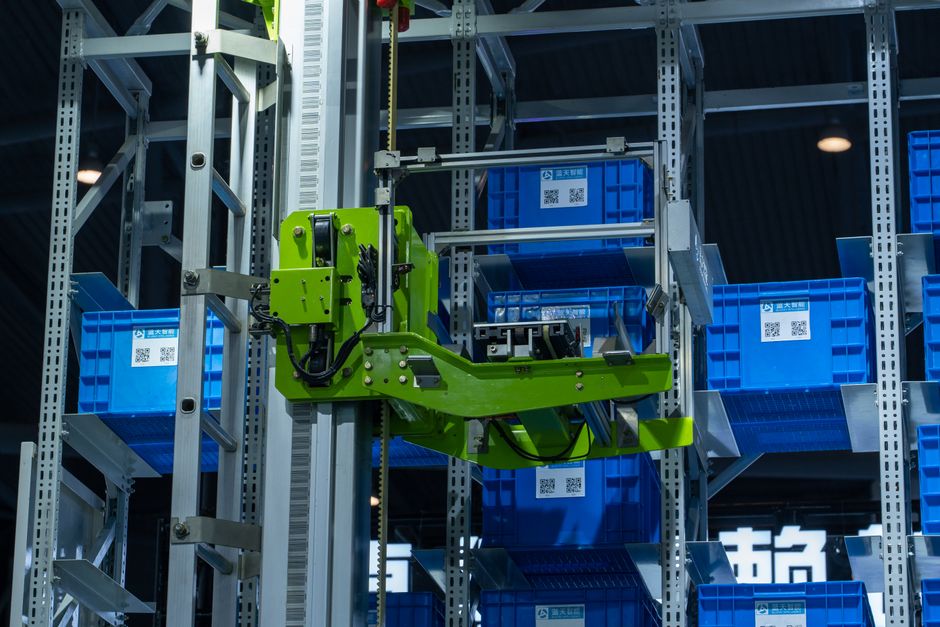
This detailed examination of TransGlobal's journey implementing Agent-Based Enterprise Automation provides concrete insights into the challenges, decisions, and outcomes that defined their transformation. With a global workforce of 12,000 employees processing 2.3 million shipments annually across 47 countries, the scale of implementation demanded careful planning and phased execution. The results—67% reduction in process completion time, 89% decrease in error rates, and $23 million in annualized cost savings—demonstrate the transformative potential of properly implemented autonomous systems.
The Business Challenge: Complexity at Scale
TransGlobal's operations required employees to navigate a labyrinth of 37 different software systems, ranging from decades-old customs documentation platforms to modern cloud-based tracking systems. A typical international shipment workflow involved 127 distinct steps across these systems, with employees spending an average of 43 minutes per shipment on manual data entry, verification, and system navigation. With volumes increasing 18% year-over-year, the company faced an untenable choice: hire hundreds of additional employees or find a fundamentally different approach to operations.
The existing RPA deployment covered approximately 15% of workflows, but maintenance consumed 40% of the automation team's capacity. Every software update, interface change, or process modification required manual script updates. Exception handling was particularly problematic—when the RPA encountered unexpected situations, it simply failed and escalated to humans, creating bottlenecks that often negated time savings. The leadership team recognized they needed Computer Interface Automation that could adapt to changes and handle exceptions intelligently.
The Implementation Approach: Phased and Strategic
Phase 1: Pilot with High-Impact Process
Rather than attempting enterprise-wide deployment, TransGlobal selected customs documentation processing as their pilot. This workflow was complex (spanning 9 different systems), high-volume (occurring in 78% of shipments), and error-prone (manual processing had a 12% error rate). The pilot scope covered shipments from three origin countries to five destinations, representing approximately 8,000 shipments monthly.
The implementation team partnered with specialists in building AI solutions to develop autonomous agents capable of navigating the diverse customs systems. Unlike the previous RPA approach that required scripting exact click sequences, the agents were trained to understand the goal (complete accurate customs documentation), recognize relevant interface elements across different system versions, and adapt when encountering variations.
Phase 2: State Management Architecture
A critical early decision involved implementing robust Stateful AI Architecture before expanding beyond the pilot. Customs processing often spans multiple days with various stakeholders providing information asynchronously. Agents needed to maintain context about each shipment's status, remember which documentation had been obtained, track pending approvals, and coordinate with other agents handling related workflows.
TransGlobal invested $1.2 million in building a state management infrastructure that provided persistent storage, distributed state synchronization, rollback capabilities, and comprehensive audit trails. While this represented a significant upfront cost, it proved essential for reliability and scaling. The architecture enabled agents to resume workflows after interruptions, coordinate complex multi-agent processes, and provide complete visibility into the status of any shipment at any time.
The Metrics: Quantifying Transformation
Efficiency Improvements
After the six-month pilot, TransGlobal measured dramatic improvements in the customs documentation workflow. Average processing time decreased from 47 minutes to 15.5 minutes per shipment—a 67% reduction. Error rates fell from 12% to 1.3%, with most remaining errors attributable to incorrect source data rather than agent mistakes. Agent utilization averaged 94%, meaning autonomous systems were productively working nearly all available time, compared to human utilization of approximately 68% (accounting for meetings, breaks, training, and task-switching overhead).
Perhaps most significantly, the agents handled 89% of shipments end-to-end without human intervention. The remaining 11% required human input for genuinely exceptional circumstances—unusual product classifications, documentation discrepancies requiring investigation, or regulatory edge cases. This represented a dramatic improvement over the previous RPA implementation, which escalated approximately 31% of cases due to its inability to handle minor variations.
Financial Impact
The pilot phase generated annualized savings of $3.7 million through reduced labor costs, fewer errors (which had previously triggered expensive shipment delays and penalties), and decreased automation maintenance overhead. The agents required only 12% of the maintenance effort compared to the previous RPA scripts, freeing the automation team to focus on expanding coverage rather than fixing broken scripts.
Following the successful pilot, TransGlobal expanded Agent-Based Enterprise Automation to twelve additional workflows over eighteen months. The full deployment achieved $23 million in annualized savings while requiring a total investment of $8.9 million in technology, implementation, and change management. The return on investment exceeded projections, with payback achieved in 5.6 months.
Technical Lessons: What Made It Work
Adaptive Interface Navigation
One of the most valuable capabilities proved to be the agents' ability to adapt to interface changes without requiring reconfiguration. During the deployment period, seven of the systems involved in automated workflows underwent significant updates. The Autonomous Enterprise AI agents adjusted to the new interfaces with minimal intervention, whereas the previous RPA implementation would have required weeks of script rewriting for changes of similar magnitude.
This adaptability stemmed from training agents to recognize functional interface elements ("the field where consignee address is entered") rather than specific pixel coordinates or element IDs. When interface layouts changed, agents could still identify the relevant fields and controls through semantic understanding rather than brittle element matching.
Multi-Agent Coordination
Complex workflows often required coordination among specialized agents—one handling customs documentation, another managing carrier booking, a third processing financial transactions. The Stateful AI Architecture enabled sophisticated coordination patterns where agents could check the status of related workflows, wait for prerequisites to complete, and hand off context seamlessly.
For instance, the customs documentation agent would signal completion of export paperwork, triggering the carrier booking agent to proceed with scheduling while simultaneously notifying the financial agent to process the appropriate fees. This choreography, managed through the state management system, enabled end-to-end workflow automation that would have been impractical with isolated agents.
Organizational Lessons: The Human Dimension
TransGlobal's leadership recognized early that technology alone wouldn't ensure success—organizational change management was equally critical. The company invested heavily in communication, explaining that automation would eliminate tedious interface navigation while creating new roles in agent oversight, exception handling, and optimization.
Rather than reducing headcount, TransGlobal redeployed 143 employees previously performing manual data entry into newly created positions: agent supervisors who monitored performance and handled escalations, process analysts who identified opportunities for additional automation, and customer service specialists who could dedicate more time to complex inquiries rather than routine status updates.
This approach achieved several goals simultaneously: it reduced resistance to automation, preserved institutional knowledge, and created career paths that combined domain expertise with technical skills. Employee satisfaction scores actually increased during the deployment period, contradicting the assumption that automation necessarily creates workforce anxiety.
Challenges and Course Corrections
The implementation wasn't without obstacles. An early challenge emerged when agents operating across time zones occasionally encountered system maintenance windows that varied by region. Initial designs assumed 24/7 system availability, leading to failed workflows when agents encountered downtime. The team implemented enhanced scheduling logic that checked system availability before initiating workflows and could defer processing until systems were accessible.
Security concerns also required mid-course adjustments. The initial deployment granted agents relatively broad permissions to reduce friction. A security audit revealed potential risks, leading to implementation of more granular permission structures and additional audit logging. While this added complexity, it provided necessary safeguards for agents operating with significant system access.
Integration with existing monitoring tools proved more difficult than anticipated. TransGlobal's established observability platforms weren't designed to track autonomous agent behavior, creating visibility gaps. The team developed custom dashboards specifically for Agent-Based Enterprise Automation, tracking metrics like success rates by workflow type, average processing times, exception frequencies, and agent utilization. These dashboards became invaluable for identifying optimization opportunities and detecting issues before they significantly impacted operations.
Conclusion: Blueprint for Success
TransGlobal Logistics' experience demonstrates both the transformative potential and implementation realities of deploying autonomous agents at enterprise scale. The quantified results—67% efficiency improvement, 89% error reduction, and $23 million in annual savings—validate the business case for Agent-Based Enterprise Automation. Equally important are the lessons about what enables success: phased implementation starting with high-impact pilots, investment in robust state management infrastructure, adaptive agents that handle interface variations, comprehensive change management addressing the human dimension, and commitment to continuous optimization rather than one-time deployment. Organizations considering similar transformations can learn from both TransGlobal's successes and mid-course corrections, recognizing that implementation requires balancing technical sophistication with organizational readiness. As enterprises increasingly adopt Agentic AI Solutions to reimagine operations, TransGlobal's blueprint offers practical guidance for navigating the journey from legacy automation to truly autonomous, adaptive systems that scale with business demands.


Comments
Post a Comment