Autonomous AI Agents FAQ: From Fundamentals to Advanced Implementation
As organizations increasingly explore artificial intelligence solutions that can operate independently, questions about capabilities, implementation approaches, and practical considerations multiply. Autonomous agents represent one of the most significant developments in applied AI, yet confusion persists about what these systems truly are, how they function, and when they deliver genuine business value versus when simpler alternatives suffice. This comprehensive FAQ addresses the most common and critical questions about autonomous intelligent systems, providing clarity for decision-makers, developers, and stakeholders navigating this transformative technology.
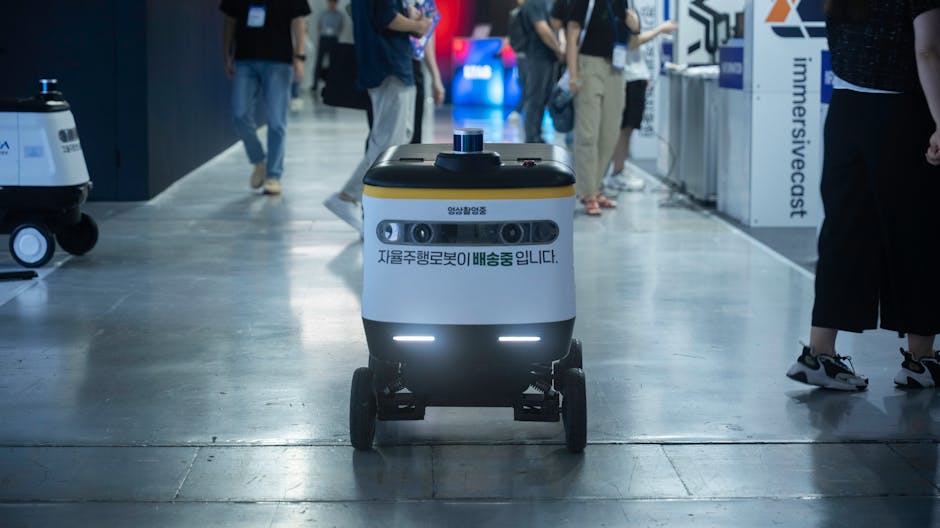
Understanding Autonomous AI Agents requires moving beyond surface-level definitions to grasp the architectural patterns, reasoning mechanisms, and operational characteristics that distinguish these systems from traditional automation. The following questions and answers progress from foundational concepts through intermediate implementation concerns to advanced topics around safety, scalability, and enterprise integration, providing a complete knowledge framework for working with autonomous intelligent systems.
Fundamental Questions: Understanding Autonomous AI Agents
What exactly are Autonomous AI Agents?
Autonomous AI Agents are intelligent systems capable of perceiving their environment, reasoning about objectives, making decisions, and taking actions to achieve goals with minimal human intervention. Unlike traditional software that follows predetermined workflows, these agents can adapt to novel situations, break down complex objectives into manageable subtasks, select and use appropriate tools, and iterate based on results. They combine large language models for reasoning with memory systems for context retention and integration capabilities that allow interaction with external tools and data sources.
How do autonomous agents differ from regular AI applications?
Standard AI applications typically perform specific, bounded tasks like classification, prediction, or content generation based on direct user input. Autonomous agents, by contrast, operate with goal-oriented behavior rather than task-oriented responses. When given an objective, they can plan multi-step approaches, execute actions, observe outcomes, and adjust strategies without requiring human guidance at each step. This autonomy introduces complexity but also enables handling of open-ended problems that lack predetermined solution paths.
What are the core components of an autonomous agent system?
Most autonomous agent architectures include several essential components working in concert. The reasoning engine, typically a large language model, provides decision-making and planning capabilities. A memory system stores context, intermediate results, and learned information across interactions. Tool integration allows the agent to interact with external systems, databases, APIs, and services. An orchestration layer manages the reasoning loop, coordinating perception, decision-making, action execution, and reflection. Finally, safety mechanisms and guardrails ensure the agent operates within acceptable boundaries and escalates uncertain situations appropriately.
Implementation and Technical Questions
What frameworks and technologies are most commonly used to build Autonomous AI Agents?
The autonomous agent ecosystem centers on several prominent frameworks. LangChain provides comprehensive tooling for building agents with memory, tool usage, and reasoning capabilities. AutoGPT pioneered fully autonomous goal-driven agents that iterate toward objectives. Microsoft's Semantic Kernel offers enterprise-grade orchestration for production deployments. For multi-agent systems where several specialized autonomous agents collaborate, frameworks like CrewAI provide coordination mechanisms and role definitions. Most implementations build on foundation models from OpenAI, Anthropic, or Google, combining these reasoning capabilities with custom tools and domain-specific knowledge.
How do you ensure AI Agent Resilience in production environments?
Building resilient autonomous systems requires multiple defensive layers. Robust error handling ensures agents can recover from tool failures, API timeouts, or unexpected responses without cascading failures. Implementing retry logic with exponential backoff addresses transient issues. State persistence allows agents to resume operations after interruptions rather than restarting from the beginning. Comprehensive logging and observability enable debugging of reasoning chains when unexpected behaviors emerge. Setting explicit timeouts and iteration limits prevents infinite loops. Finally, implementing fallback mechanisms and human escalation paths ensures that when agents encounter situations beyond their capabilities, they fail safely rather than proceeding with uncertain actions.
What role does prompt engineering play in agent performance?
Prompt design fundamentally shapes agent behavior, decision quality, and reliability. System prompts establish the agent's role, capabilities, constraints, and reasoning approach. Well-crafted prompts encourage step-by-step reasoning, explicit tool selection justification, and acknowledgment of uncertainty. Prompts must balance specificity with flexibility—too rigid and the agent cannot adapt to novel situations; too vague and behavior becomes unpredictable. Effective prompts include examples of desired reasoning patterns, explicit instructions about when to seek help versus proceeding independently, and clear success criteria. Iterative refinement based on observed agent behavior remains essential, as subtle prompt changes can significantly impact decision-making patterns.
How can organizations leverage platforms for building AI solutions when implementing autonomous agents?
Enterprise AI development platforms provide integrated environments that accelerate agent deployment while ensuring governance and compliance. These platforms typically offer pre-built connectors to enterprise data sources, template agent architectures for common use cases, and monitoring infrastructure for tracking agent behavior in production. They address critical enterprise concerns around data security, access control, audit trails, and regulatory compliance that would require significant custom development if building from scratch. For organizations without deep AI expertise, these platforms reduce time-to-value while incorporating best practices for AI Agent Safeguards and Enterprise AI Integration.
Advanced Topics: Safety, Governance, and Scale
What safeguards are necessary to prevent autonomous agents from taking harmful actions?
Implementing comprehensive AI Agent Safeguards requires multiple defensive mechanisms. Input validation ensures agents receive well-formed objectives and constraints. Action verification adds confirmation steps before executing consequential operations like data deletion, financial transactions, or external communications. Tool access controls limit which capabilities agents can invoke, applying principle of least privilege. Content filtering prevents agents from generating or acting on harmful, biased, or inappropriate content. Monitoring systems detect anomalous behavior patterns that might indicate misalignment or unexpected emergent behaviors. Finally, human-in-the-loop designs for high-stakes decisions ensure critical actions receive human review before execution.
How do you evaluate whether an autonomous agent is working correctly?
Agent evaluation presents unique challenges compared to traditional software testing. Functional testing verifies agents can successfully complete intended tasks across diverse scenarios and edge cases. Reasoning quality assessment examines decision-making processes, ensuring agents consider appropriate factors and follow logical steps toward goals. Robustness testing evaluates behavior when facing incomplete information, ambiguous objectives, or tool failures. Safety testing probes for potential harmful behaviors or boundary violations. Performance benchmarking measures completion rates, efficiency, and resource utilization. Since agent behavior can vary across executions due to model stochasticity, evaluation typically requires multiple runs and statistical analysis rather than deterministic assertions.
What are the limitations and failure modes of current autonomous agent technology?
Despite significant capabilities, Autonomous AI Agents face inherent limitations. They can struggle with tasks requiring precise numerical reasoning or complex mathematical operations. Long-running tasks involving many steps increase the probability of compounding errors as mistakes in early reasoning affect subsequent decisions. Agents may exhibit brittleness when encountering situations substantially different from training data or examples in prompts. They sometimes fail to recognize the boundaries of their knowledge, proceeding with unfounded confidence rather than seeking clarification. Tool usage can be unreliable, with agents occasionally failing to invoke available tools or misinterpreting tool outputs. Understanding these limitations helps organizations deploy agents appropriately while implementing compensating controls.
Enterprise Integration and Operational Questions
How do autonomous agents integrate with existing enterprise systems and workflows?
Enterprise AI Integration typically occurs through several patterns. API-based integration allows agents to invoke existing services and microservices, treating them as tools in the agent's capability set. Database connectivity enables agents to query and update structured data repositories while respecting access controls and transaction boundaries. Event-driven architectures allow agents to respond to business events and emit their own events as they complete tasks, integrating into broader workflow orchestration. Message queue integration supports asynchronous processing patterns common in enterprise environments. Authentication and authorization systems ensure agents operate with appropriate permissions, often using service accounts with scoped credentials. Modern integration frameworks help standardize these connection patterns, reducing custom integration overhead.
What infrastructure and operational requirements do autonomous agent deployments have?
Running autonomous agents in production requires thoughtful infrastructure provisioning. Compute resources must accommodate both the base language model inference and the orchestration logic managing reasoning loops and tool execution. Memory systems may require vector databases for semantic retrieval, adding storage and query infrastructure. API rate limits for foundation model providers necessitate request queuing and throttling mechanisms. Latency requirements influence deployment topology—real-time interactive agents need different optimization than batch processing agents. Observability infrastructure for tracing agent reasoning and debugging unexpected behaviors becomes critical. Cost management requires monitoring token usage, API calls, and compute consumption, as autonomous agents can incur variable expenses based on task complexity and iteration counts.
How does the Model Context Protocol relate to autonomous agent implementations?
Emerging standards address the proliferation of custom integrations in agent architectures. These protocols define standardized interfaces for how agents discover and interact with data sources, tools, and services. Rather than building bespoke connectors for each enterprise system, agents can use protocol-compliant interfaces that work across platforms. This standardization accelerates development, improves reliability through well-tested implementations, and enhances maintainability as organizations evolve their technology stacks. Protocol adoption also facilitates multi-vendor environments where agents from different providers can leverage common infrastructure and data access patterns.
Conclusion
The questions explored in this comprehensive FAQ reflect both the tremendous potential and the practical complexities of Autonomous AI Agents. As the technology matures, understanding moves beyond whether to adopt these systems toward how to implement them effectively, safely, and in alignment with business objectives. Success requires balancing autonomy with appropriate oversight, leveraging powerful frameworks while implementing necessary safeguards, and maintaining realistic expectations about current capabilities while preparing for rapid advancement. Organizations that develop deep understanding of agent architectures, evaluation approaches, and integration patterns position themselves to harness autonomous intelligence as a genuine competitive advantage. As standardization efforts like the Model Context Protocol mature, the path from concept to production deployment will continue to become more accessible, enabling broader adoption of autonomous systems that augment human capabilities and transform how organizations operate.


Comments
Post a Comment